In the bustling world of call centers, understanding how your team is performing isn’t just a nice-to-have; it’s absolutely crucial for success. You’re dealing with customer interactions that shape your brand’s reputation, and each agent plays a vital role in that equation. But how do you objectively measure their contributions and identify areas for growth? This is where a structured approach to performance evaluation becomes indispensable, moving beyond mere anecdotes to data-driven insights.
Effectively monitoring and improving agent performance is a cornerstone of operational excellence. It allows managers to pinpoint specific strengths, address weaknesses with targeted coaching, and ensure that every team member is aligned with the company’s customer service goals. Without a clear system, efforts to elevate service quality can often feel like shooting in the dark, leading to inconsistent results and frustrated agents.
That’s precisely why having a robust and easy-to-use call center agent performance report template can transform how you manage your team. It provides a standardized framework for consistent evaluation, fostering transparency and fairness, while also giving agents a clear roadmap for their professional development. Let’s explore what makes such a template truly effective and how you can leverage it to empower your entire call center operation.
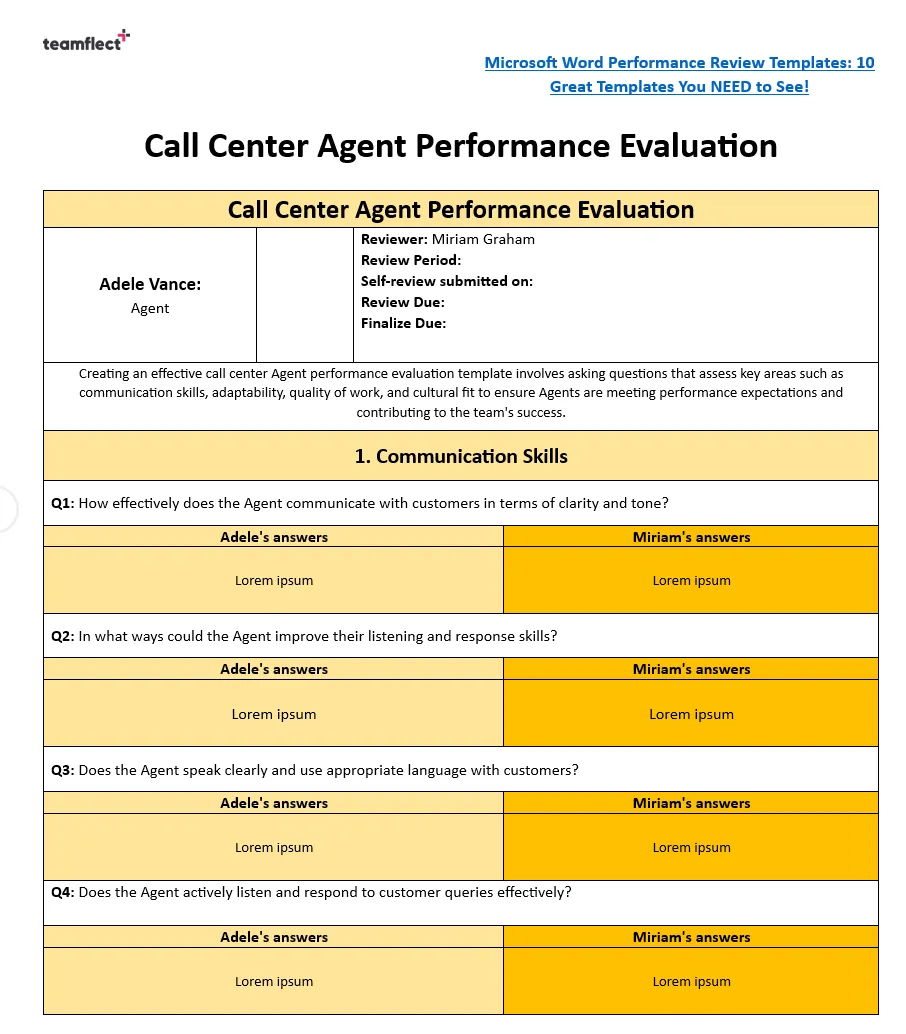
Crafting an Effective Agent Performance Report
Building a performance report that truly drives improvement requires more than just listing a few numbers. It needs to be a comprehensive tool that tells a story about an agent’s contributions, their areas of excellence, and where they might need a little extra support. Think of it as a personalized growth plan, designed to elevate individual performance and, by extension, the overall customer experience your call center delivers. The goal is to move beyond simple scores and understand the ‘why’ behind the data, creating actionable insights that lead to tangible results.
A good report starts with fundamental agent information, ensuring clarity and context for every evaluation. This usually includes the agent’s name, employee ID, the reporting period (e.g., monthly, quarterly), and the name of the evaluating manager. Having these basic details clearly laid out at the beginning helps to personalize the report and makes it easy to track performance trends over time, providing a consistent reference point for all subsequent discussions and coaching sessions.
Core Performance Metrics
The heart of any call center agent performance report template lies in its metrics. These are the measurable indicators that provide an objective look at an agent’s efficiency, effectiveness, and customer impact. They typically fall into two categories: quantitative and qualitative. Quantitative metrics give us hard numbers, while qualitative metrics delve into the nuances of customer interaction and adherence to service standards.
Here are some essential metrics to consider including:
- Average Handle Time (AHT): This measures the average duration of a complete customer interaction, from initial contact to follow-up. While a lower AHT often indicates efficiency, it’s crucial to balance this with quality of resolution.
- First Call Resolution (FCR): FCR measures the percentage of customer issues resolved on the first contact. High FCR is a strong indicator of agent proficiency and customer satisfaction, as it avoids frustrating repeat calls.
- Customer Satisfaction (CSAT) / Net Promoter Score (NPS): These scores are direct measures of how happy customers are with their interaction. CSAT usually comes from post-call surveys, while NPS gauges a customer’s likelihood to recommend your service.
- Adherence to Schedule: This metric tracks how well agents stick to their assigned shifts, breaks, and training sessions, crucial for operational efficiency and proper staffing levels.
- Occupancy Rate: This indicates the percentage of time agents spend actively engaged with customers or in related tasks during their logged-in time. It helps assess workload and potential burnout.
Beyond the numbers, qualitative assessments are equally vital. These often come from call monitoring and evaluations, assessing aspects like communication clarity, empathy, problem-solving skills, and adherence to scripts or brand voice. An agent might have a low AHT, but if their tone is rushed or they lack empathy, the customer experience suffers. Incorporating manager observations and peer feedback can add rich context that purely numerical data misses.
Ultimately, the most powerful performance reports combine both quantitative and qualitative data points to create a holistic view of an agent’s capabilities. It’s about seeing the full picture – how quickly an agent resolves issues, how well they satisfy customers, and how effectively they embody your company’s values in every interaction. This comprehensive approach empowers managers to provide well-rounded feedback and agents to understand their performance in its entirety.
Using Your Performance Report for Growth and Strategic Insight
Once you have a well-structured call center agent performance report template filled with data, the real work begins: turning those insights into tangible improvements. A report isn’t just an archival document; it’s a dynamic tool for fostering continuous growth within your team and optimizing your entire operation. Its true value lies in how it informs coaching sessions, identifies training gaps, and ultimately contributes to a stronger, more capable workforce.
These reports serve as the foundation for meaningful one-on-one coaching sessions between managers and agents. By reviewing specific metrics and qualitative feedback together, agents gain a clear understanding of their strengths and areas requiring attention. This personalized feedback is invaluable for professional development, allowing agents to set clear goals for improvement, whether it’s working on their average handle time, enhancing their empathy in challenging situations, or boosting their first call resolution rate. It also provides a structured way to celebrate successes and recognize top performers, boosting morale and encouraging positive behaviors across the team.
Furthermore, when aggregated, the data from individual agent performance reports can offer powerful strategic insights for the call center as a whole. By looking at trends across multiple reports, managers can identify systemic issues, such as a particular product knowledge gap causing low FCR, or a training deficit impacting CSAT scores. This higher-level analysis can inform the creation of new training programs, the refinement of existing processes, or even adjustments to staffing and technology, leading to more efficient operations and a consistently better customer experience for everyone.
Embracing a systematic approach to performance reporting is a game-changer for any call center aiming for excellence. It transforms abstract goals into concrete actions, providing a clear lens through which to view individual and team contributions. By consistently evaluating, providing feedback, and leveraging these detailed reports, you foster a culture of continuous improvement, ensuring your agents are always at their best and your customers consistently receive outstanding service. This commitment to data-driven insights ultimately strengthens your entire operation, paving the way for sustained success and unparalleled customer satisfaction.