Managing business travel and employee expenses can often feel like navigating a complex maze, especially for businesses that are growing or have a frequently traveling workforce. Keeping track of every receipt, categorizing each expenditure, and ensuring compliance with company policies is a time-consuming task for both employees and the finance department. The potential for errors, missed reimbursements, or even fraud is a constant concern, leading to inefficiencies and unnecessary stress.
Without a standardized system, employees might use various methods to submit their expenses, from handwritten notes to disorganized spreadsheets, making reconciliation a nightmare. This lack of uniformity not only slows down the reimbursement process but also makes it incredibly difficult to analyze spending patterns, identify cost-saving opportunities, or accurately forecast future budgets. Imagine trying to piece together dozens of individual reports, each formatted differently, just to get a clear picture of your company’s operational costs.
That is precisely where a well-designed travel and expense report template becomes an invaluable asset. It acts as a clear, consistent framework that streamlines the entire expense management process, from submission to approval and reimbursement. By providing a uniform structure, it simplifies record-keeping for employees and drastically reduces the administrative burden on your accounting team, transforming a chaotic task into an organized, efficient operation.
Why a Standardized Travel and Expense Report Template is Essential for Your Business
Adopting a standardized travel and expense report template is more than just a matter of convenience; it is a strategic move that can significantly impact your company’s financial health and operational efficiency. When every employee uses the same format to document their spending, it creates a transparent and easily auditable trail of all business-related expenditures. This consistency helps to prevent discrepancies, reduces the likelihood of policy violations, and makes the reimbursement process smoother for everyone involved.
Think about the time saved. Instead of spending hours deciphering various expense formats or chasing down missing information, your finance team can quickly review submissions, verify details, and process reimbursements with confidence. Employees, too, benefit from a clear understanding of what information is required, which encourages timely and accurate submissions. This translates into less frustration, fewer rejections, and a happier workforce, all while maintaining strict financial oversight.
Moreover, a robust template empowers businesses to gain deeper insights into their spending habits. When all data is collected uniformly, it becomes much easier to aggregate and analyze expenses by department, project, or travel destination. This analytical capability is crucial for identifying areas where costs can be cut, negotiating better deals with vendors, or refining travel policies to ensure they align with the company’s budget and strategic goals.
Key Elements of an Effective Travel and Expense Report Template
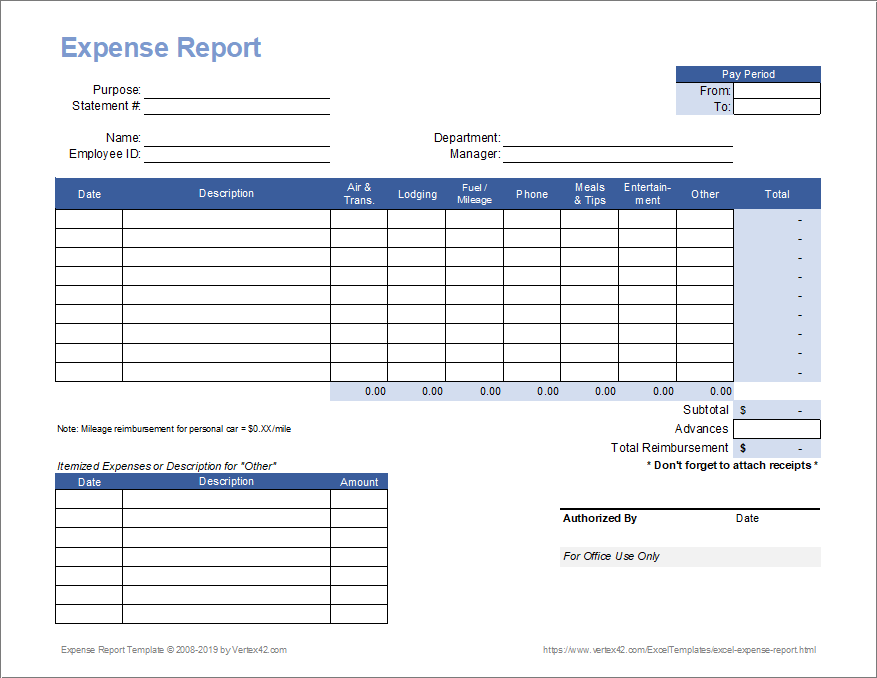
To truly be effective, a travel and expense report template should include several critical components that capture all necessary information for accurate reporting and easy reconciliation. These elements ensure that no crucial detail is overlooked, simplifying the review process and providing a comprehensive record for financial analysis and compliance.
When designing or choosing your template, make sure it covers the essentials that will empower both employees and your accounting department. Here are some fundamental fields you should always consider:
- Employee Information: Name, department, employee ID, and contact details.
- Report Period: Start and end dates for the expenses being reported.
- Purpose of Travel/Expense: A clear description of why the expense was incurred.
- Date of Expense: The specific date each transaction occurred.
- Vendor/Merchant Name: Where the purchase was made.
- Category of Expense: Classification like lodging, meals, transportation, supplies, etc.
- Payment Method: How the expense was paid (company card, personal card, cash).
- Amount: The exact monetary value of the expense.
- Currency: If international travel is involved, clearly state the currency.
- Receipt Attached: A checkbox or field to indicate if a receipt is provided.
- Approval Signatures: Spaces for employee, manager, and finance department approvals.
By incorporating these detailed fields, your template becomes a powerful tool for maintaining accuracy and transparency. It serves as a guiding hand for employees, ensuring they provide all the necessary information upfront, and acts as a solid foundation for your financial reporting, making audits and budgeting significantly simpler.
Simplifying Expense Management for Small Businesses and Large Enterprises
Whether you’re a small startup with a handful of employees occasionally traveling for client meetings or a multinational corporation with extensive business trips, the principles of efficient expense management remain the same. The right travel and expense report template can scale with your needs, adapting to different complexities without losing its core functionality. For smaller teams, a basic spreadsheet template might suffice, offering a straightforward way to track and submit costs.
As businesses grow, so does the volume and complexity of expenses. Larger organizations often benefit from more sophisticated templates, perhaps integrated into expense management software, that can handle multiple currencies, complex approval workflows, and detailed departmental budgeting. Regardless of size, the goal is always to reduce manual errors, accelerate reimbursements, and provide clear visibility into spending, freeing up valuable time and resources.
Implementing a new template doesn’t have to be a daunting task. Start by clearly communicating the benefits and providing training to your employees. Encourage them to provide feedback, which can help in refining the template over time to better suit your company’s unique operational needs. A template that is easy to understand and use is more likely to be adopted universally, leading to greater compliance and efficiency across the board.
- Provide clear guidelines and examples.
- Offer training sessions for new users.
- Gather feedback for continuous improvement.
Ultimately, a well-executed template becomes a cornerstone of financial governance, ensuring that every penny spent is accounted for, approved, and aligned with company objectives. It moves expense reporting from a tedious chore to an integrated part of your business operations.
Embracing a dedicated system for tracking expenses, whether through a simple printable form or an advanced digital solution, profoundly impacts your financial workflows. It ensures that business expenditures are not just recorded but are managed strategically, contributing to better financial planning and control. The consistency and clarity offered by a robust template prevent headaches, reduce delays, and foster a culture of accountability within your organization.
By making it easier for employees to submit accurate reports and for finance teams to process them efficiently, you are investing in smoother operations and greater peace of mind. This structured approach allows you to focus more on core business activities and less on administrative burdens, ensuring that your company’s financial health remains strong and transparent.