Landing that crucial civil engineering project often hinges on presenting a compelling and professional proposal. It’s not just about showcasing your technical prowess; it’s about clearly communicating your understanding of the client’s needs, your proposed solution, and why you’re the best team for the job. This is precisely where a well-structured civil engineering project proposal template becomes an invaluable asset, transforming a daunting task into a streamlined, efficient process.
Think of a proposal as your firm’s handshake with a potential client. It’s the first impression, a detailed overview that speaks volumes about your organization’s capability, attention to detail, and commitment to excellence. In a competitive industry, merely having the skills isn’t enough; you need to articulate them persuasively, demonstrating not just what you can do, but how you will achieve it.
Crafting a new proposal from scratch for every single opportunity can be incredibly time-consuming and prone to inconsistencies. A robust template ensures that you don’t miss any critical sections, maintain a consistent brand voice, and focus your efforts on customizing the specifics rather than rebuilding the foundation each time. It’s about working smarter, not harder, to secure those significant contracts.
The Blueprint for Winning Civil Engineering Projects
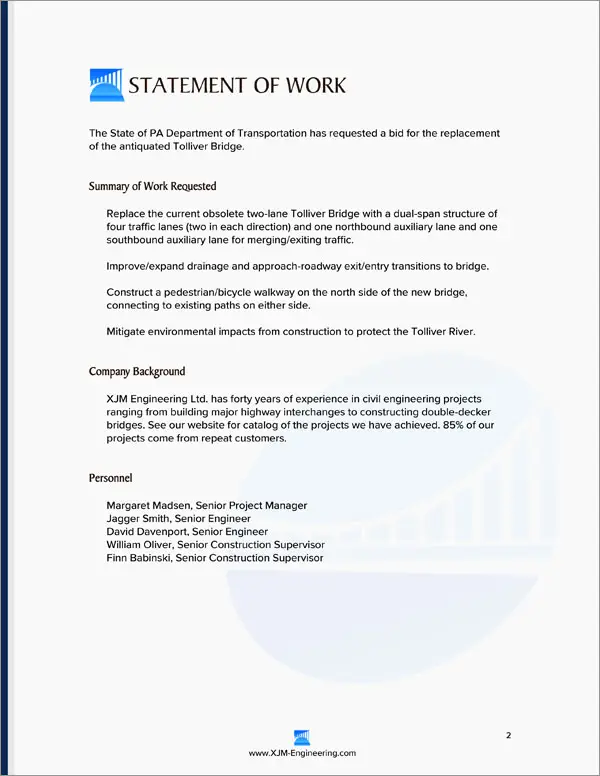
In the complex world of civil engineering, projects are rarely simple. They involve intricate designs, regulatory compliance, environmental considerations, and often, significant public or private investment. A well-designed proposal template acts as your firm’s blueprint, guiding you through the essential elements needed to articulate your project vision and methodology. It ensures that every aspect, from preliminary assessments to project timelines and budget estimates, is systematically addressed.
One of the primary advantages of utilizing a standardized template is consistency. When multiple team members are contributing to proposals, a template ensures that all submissions adhere to a uniform standard of quality and presentation. This professionalism reflects positively on your firm, demonstrating organization and a meticulous approach to business development, just as much as to project execution.
Furthermore, a comprehensive template helps in managing risk. By prompting you to consider all necessary components – scope, deliverables, potential challenges, and mitigation strategies – it helps uncover potential issues before they become actual problems. This foresight can be a major differentiator, showing clients that you not only understand the project but also anticipate its complexities, offering solutions preemptively.
Key Elements that Elevate Your Proposal
When developing or refining your civil engineering project proposal template, consider including dedicated sections for critical information. A strong executive summary, for instance, provides a high-level overview that can capture a client’s attention immediately, succinctly outlining your solution and its benefits. Detailed project scope and objectives clarify exactly what will be delivered and why, ensuring alignment between your firm and the client’s expectations from the outset.
Technical approach and methodology sections are where your engineering expertise truly shines. Here, you can elaborate on the specific techniques, software, and standards you will employ, demonstrating your firm’s technical edge and innovative capabilities. Equally important are sections on project schedule and budget, which need to be realistic, transparent, and thoroughly justified to build trust and credibility, showing a clear path to project completion within defined parameters.
Finally, don’t overlook the importance of team qualifications and relevant experience. Clients want to know that the people working on their project are capable and experienced. Highlighting key personnel and previous successful projects relevant to the current proposal can significantly bolster your firm’s appeal, convincing stakeholders that your team has the track record to deliver exceptional results and handle the project’s unique demands.
Customizing Your Template for Specific Opportunities
While the goal of a template is standardization, its true power lies in its adaptability. A rigid, one-size-fits-all approach will fall short in the diverse landscape of civil engineering. The best civil engineering project proposal template allows for significant customization to meet the unique demands of each potential client and project. This means having placeholders and prompts that guide you in tailoring the content, rather than simply filling in blanks with generic statements.
For instance, an environmental impact assessment project will require different emphases and technical details than a bridge construction project. Your template should guide you to modify the scope, methodology, and even the executive summary to directly address the specific challenges and objectives outlined in the client’s Request for Proposal (RFP). This personalized touch shows genuine engagement and a deep understanding of their particular needs, distinguishing your firm from competitors.
Consider incorporating optional modules or sections within your template that can be toggled on or off depending on the project type. This might include specialized subsections for regulatory compliance specific to certain regions, detailed sustainability metrics for green building projects, or advanced risk assessment matrices for high-stakes infrastructure developments. Such flexibility ensures your template remains relevant and effective across a broad spectrum of civil engineering endeavors, making it a versatile tool for your business development efforts.
- Client-Specific Needs: Always begin by thoroughly understanding the client’s pain points and goals. How does your proposal directly solve their problem and bring them value?
- Project Scope Alignment: Ensure your proposed scope of work perfectly matches what the client is asking for, avoiding both underselling and overpromising, which can lead to complications later.
- Competitive Differentiators: Highlight what makes your firm uniquely qualified. Is it your innovative technology, unparalleled experience, or a specific team member’s expertise that sets you apart?
- Local Regulations: Integrate specific local codes, permits, and environmental standards that are pertinent to the project’s location, demonstrating your thorough understanding of the local context.
Investing time in developing a robust civil engineering project proposal template is an investment in your firm’s future growth and success. It streamlines your proposal writing process, enhances the professionalism of your submissions, and ultimately increases your chances of securing profitable contracts. A well-crafted template empowers your team to focus on the unique aspects of each project, rather than reinventing the wheel with every new opportunity, allowing for greater efficiency and strategic thinking.
By having a clear, organized, and adaptable framework, you can consistently present your firm as a leader in the civil engineering sector. This strategic approach to proposal development not only saves valuable time and resources but also strengthens client relationships by demonstrating a commitment to clarity, detail, and excellence from the very first interaction. It’s about building trust and showcasing capability, one meticulously prepared proposal at a time.