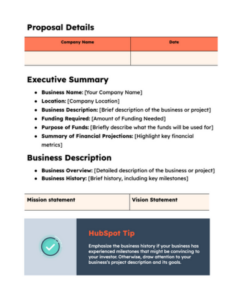
Embarking on the journey to secure private equity funding for your business can feel like navigating a complex labyrinth. One of the most crucial tools you’ll need for this expedition is a well-structured private equity investment proposal template. This document isn’t just a collection of financial figures; it’s your business’s compelling story, meticulously crafted to capture the attention and confidence of potential investors. It serves as your primary pitch, outlining your vision, market opportunity, and the significant return on investment a private equity firm can expect.
In the competitive landscape of capital acquisition, simply having a great business idea isn’t enough. You need to articulate that idea, its potential, and its strategic fit in a way that resonates with sophisticated investors who are constantly evaluating numerous opportunities. A strong proposal acts as a blueprint, guiding them through your company’s strengths, your strategic plans for growth, and how their investment will fuel substantial value creation.
Understanding the essential components of such a proposal and how to present them effectively can significantly improve your chances of securing the funding you need. This guide will walk you through the core elements that private equity firms look for, helping you to construct a document that is both persuasive and professional, ultimately positioning your venture for success.
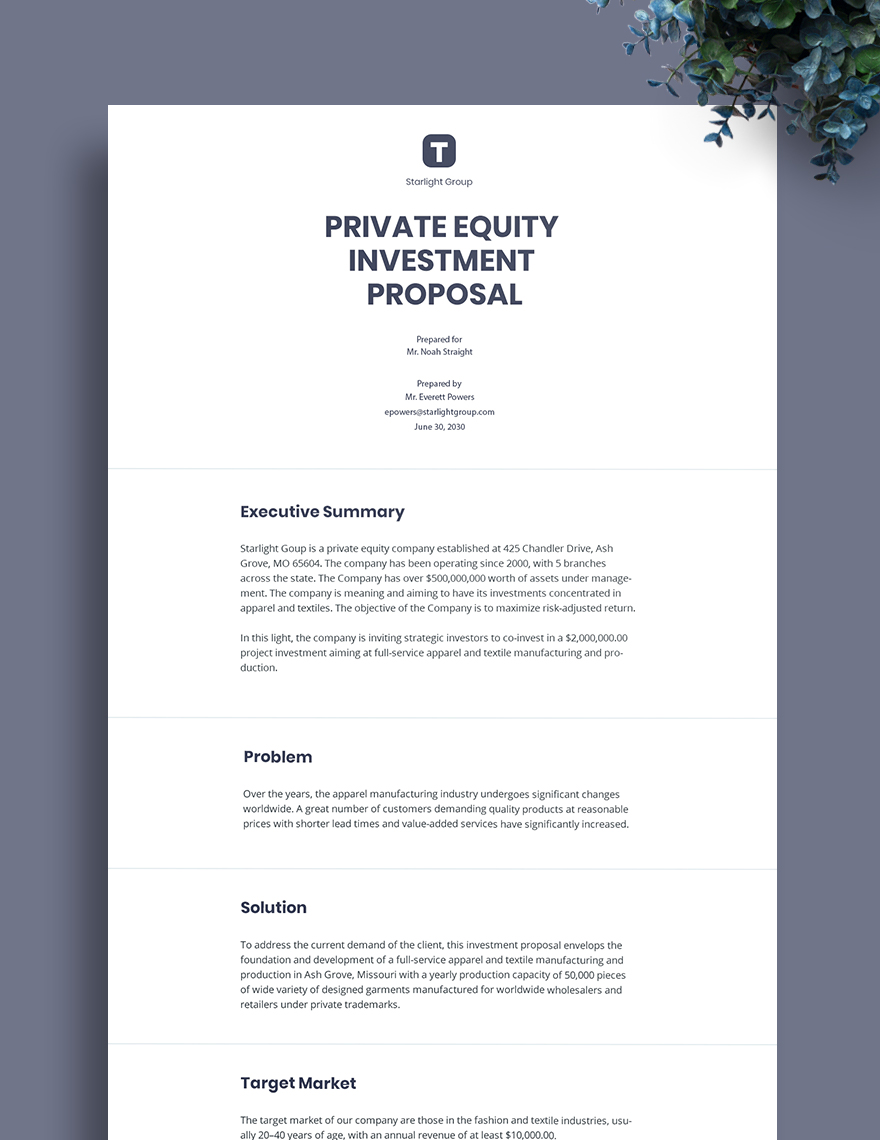
Crafting a Compelling Private Equity Investment Proposal
Building an investment proposal that truly stands out requires a blend of detailed analysis, strategic foresight, and persuasive storytelling. It’s about demonstrating not just what your business does, but why it’s a unique opportunity for significant returns. Every section must contribute to building a cohesive narrative that instills confidence and clearly outlines the path to profitability for the private equity firm.
Executive Summary: Your Hook
The executive summary is arguably the most critical part of your private equity investment proposal template. It needs to be concise, compelling, and encapsulate all the key information an investor needs to decide if they want to read further. Think of it as an elevator pitch for your entire proposal, highlighting your business, the market opportunity, the investment ask, projected returns, and your experienced management team, all on a single page if possible. It sets the tone and must immediately grab their interest.
Company Overview and Vision: The Heart of Your Story
Beyond the numbers, investors want to understand the essence of your business. This section is where you introduce your company’s history, mission, values, and a clear vision for the future. Detail your current operations, competitive advantages, and market position. Crucially, articulate how your business is uniquely positioned to capitalize on market trends and deliver sustainable growth, showcasing the strength and experience of your leadership team. This helps private equity firms understand the fundamental value proposition.
Market Opportunity and Analysis: Demonstrating Potential
Private equity firms are inherently focused on market dynamics. Here, you’ll present a thorough analysis of your target market, including its size, growth potential, key trends, and segmentation. Don’t shy away from discussing the competitive landscape, identifying your main competitors, and explaining your unique differentiation. Provide credible data and research to support your claims, illustrating a clear, addressable market that can support significant expansion and justify the proposed investment.
Financial Projections and Deal Structure: The Numbers Game
This is where you translate your strategic vision into concrete financial expectations. Provide detailed historical financial performance alongside robust, defensible projections for the next 3-5 years. Outline your key assumptions, revenue streams, cost structures, and profitability metrics. Clearly specify the amount of investment you are seeking, how the funds will be utilized, and the proposed deal structure, including equity ownership and any debt components. Show a clear path to attractive returns for the investor, demonstrating financial viability.
Exit Strategy: A Clear Path to Liquidity
Private equity investors are always thinking about how they will eventually realize their return. A well-defined exit strategy is paramount. Outline potential avenues for an exit, such as an acquisition by a strategic buyer, a public offering (IPO), or a secondary buyout. Provide a realistic timeline and justify why these exit paths are viable and attractive, giving investors confidence in their potential for a profitable divestment and maximizing their investment returns.
Beyond the Numbers: Making Your Proposal Stand Out
While financials and market analysis form the backbone of any private equity investment proposal, the qualitative aspects can often be the differentiator. Private equity firms invest in people as much as they invest in ideas. Demonstrating a strong, cohesive management team with a proven track record, clear leadership, and a shared vision is incredibly important. Highlight your team’s expertise, relevant experience, and any unique insights that give your company an edge. Show your passion and commitment, as these intangible qualities often build trust and conviction.
Another crucial element is the clarity and conciseness of your presentation. Private equity professionals review countless proposals. A document that is well-organized, easy to read, and free of jargon will always be appreciated. Tailor your proposal to the specific private equity firm you are approaching; understanding their investment focus, portfolio companies, and preferred industries allows you to customize your narrative and highlight aspects most relevant to them. Personalizing your pitch shows you’ve done your homework and genuinely believe in a synergistic partnership.
Finally, remember that your proposal is just one part of the engagement process. Be prepared for rigorous due diligence and follow-up questions. Maintain open lines of communication, be transparent, and demonstrate flexibility while standing firm on your core value. Building a relationship with potential investors, even after submitting your private equity investment proposal template, is key to moving forward. Show that you are a reliable, strategic partner, ready to collaborate for mutual success.
Developing a comprehensive and persuasive investment proposal is an art form that blends detailed financial analysis with compelling narrative. It’s about presenting your business not just as it is today, but as it could be with the right strategic capital, outlining a clear trajectory for exponential growth and lucrative returns for all stakeholders involved.
By meticulously addressing each component, from the overarching market opportunity to the granular financial projections and a clear exit strategy, you significantly enhance your appeal to private equity firms. Your investment in crafting this document thoughtfully positions your business as a prime candidate for partnership, setting the stage for transformative growth and realizing your ambitious vision.