Stepping into the world of interior design, whether you’re a seasoned professional or just starting out, one of the most critical tools in your arsenal is a well-crafted project proposal. It’s more than just a price list; it’s your chance to make a lasting first impression, articulate your vision, and ultimately, win the client. That’s precisely why having a robust interior design project proposal template is invaluable – it streamlines your process, ensures consistency, and elevates your professionalism without you having to reinvent the wheel every single time.
A truly effective proposal acts as a bridge, connecting your client’s aspirations with your creative solutions. It helps set clear expectations from the outset, outlining the scope of work, budget considerations, and project timelines. This clarity fosters trust and demonstrates your commitment to a smooth, successful collaboration, making the client feel secure in their decision to choose you.
Think of your proposal as a comprehensive roadmap for the design journey. It should not only inform but also inspire, showcasing your unique design philosophy and ability to transform spaces. Let’s dive into what goes into creating a compelling proposal that not only impresses but also converts prospects into delighted clients.
What Makes a Winning Interior Design Project Proposal Template?
Crafting a winning proposal is about more than just listing services and prices; it’s about telling a story, your story, and how it aligns with the client’s needs. A truly effective proposal template ensures you hit all the right notes every time, presenting a comprehensive, professional, and persuasive document that leaves no stone unturned and positions you as the ideal designer for their project.
At its core, a strong proposal communicates value and understanding. It’s your opportunity to demonstrate that you’ve truly listened to the client, grasped their vision, and possess the expertise to bring it to life. This initial connection is crucial for building rapport and confidence, which are fundamental to any successful design partnership.
Project Overview and Client Understanding
This section is where you show the client you’ve been paying attention. Start by reiterating their needs, goals, and the specific challenges they’re looking to solve. A brief summary of your understanding of their project demonstrates active listening and empathy, making them feel heard and valued from the get-go.
Clearly define the project’s scope. What exactly will you be designing? What rooms are included? What is the overall objective of the redesign? Being precise here helps manage expectations and prevents misunderstandings down the line, ensuring everyone is on the same page regarding the project’s boundaries.
Design Concept and Vision
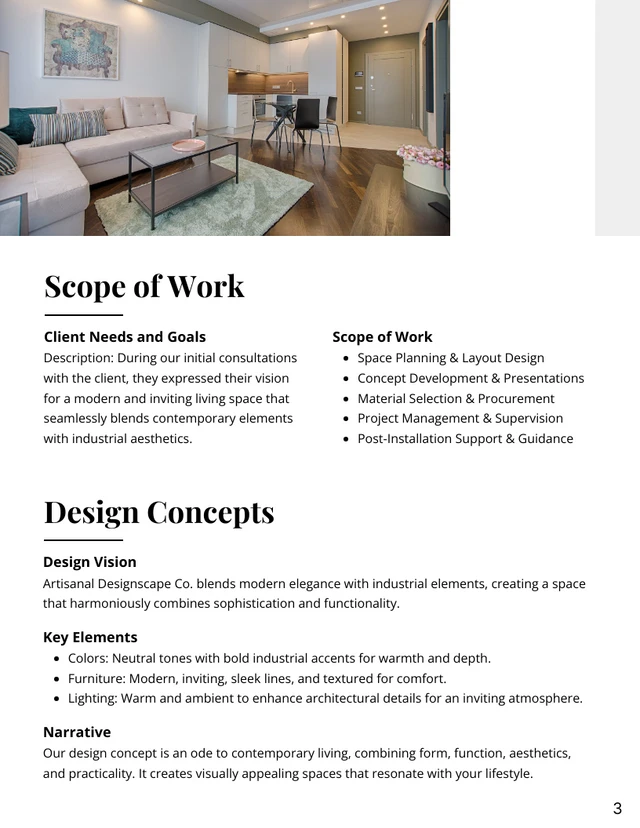
Here’s where your creativity shines. Briefly articulate your initial design concept and vision for their space. This isn’t a full design presentation, but rather a glimpse into your creative approach. You might touch on themes, desired moods, or functional improvements, helping the client visualize the potential transformation.
Explain how your proposed design addresses their specific pain points or aspirations. For example, if they need more storage, describe how your design will incorporate smart storage solutions. If they crave a tranquil space, elaborate on the color palettes and material choices that will achieve that serenity.
Scope of Work and Deliverables
This is the detailed breakdown of what you will provide. Be explicit about every service included: initial consultations, conceptual design, space planning, material and finishes selection, custom furniture design, procurement assistance, project management, and final styling. The more detailed you are, the clearer the client’s understanding of your comprehensive offering.
Budget and Fee Structure
Transparency is key when it comes to money matters. Clearly outline your fees, whether it’s an hourly rate, a fixed fee for the project, or a percentage of the overall budget. Explain what’s included in your fees and, just as importantly, what isn’t, such as contractor costs or furniture purchases. This upfront honesty builds trust.
Timeline and Project Milestones
Provide a realistic timeline for the project, breaking it down into key phases and milestones. This could include initial concept development, design presentations, procurement, and installation. A well-structured timeline helps the client understand the progression of the project and manage their own expectations.
Terms and Conditions
This vital section covers the legal and practical aspects. Include details on payment schedules, revision policies, cancellation terms, and intellectual property. While it might seem less glamorous than the design concepts, clear terms and conditions protect both parties and ensure a smooth working relationship.
Your Firm’s Expertise and Portfolio
Don’t forget to briefly showcase why you are the best choice. Include a short blurb about your experience, qualifications, and unique selling points. You might also mention where they can view your portfolio, subtly reinforcing your capabilities and previous successes without bogging down the proposal itself.
Tips for Customizing Your Interior Design Project Proposal Template
While an interior design project proposal template is an incredible efficiency tool, its true power lies in its adaptability. No two clients or projects are exactly alike, so simply filling in blanks won’t always cut it. The art of a successful proposal is in taking that solid framework and molding it to perfectly fit the unique contours of each new opportunity that comes your way.
Personalization isn’t just a nice-to-have; it’s a necessity. Clients want to feel that their project is important and that you’ve put thought specifically into their needs, rather than just sending a generic document. Making each proposal feel bespoke shows attention to detail and a genuine interest in their success. Here’s how you can effectively customize your template:
- Research your client thoroughly to understand their business, personal style, and previous projects if applicable.
- Reflect their specific needs, desires, and pain points directly in your language and proposed solutions.
- Tailor your language and tone to match their professionalism or casualness.
- Include personal touches, such as referencing a specific detail from your initial conversation.
- Showcase relevant past projects from your portfolio that align closely with their vision or industry.
By investing a little extra time in customization, you transform a standard document into a compelling story that resonates deeply with the client. It’s this thoughtful approach that differentiates you in a competitive market, demonstrating your commitment to their vision and solidifying their confidence in your ability to deliver exceptional results.
A meticulously crafted and thoughtfully customized proposal is far more than just paperwork; it’s a powerful sales tool and a foundation for a successful client relationship. It provides clarity, builds trust, and allows your passion for design to shine through, paving the way for exciting transformations and enduring partnerships. Investing in a robust template and the skill to personalize it effectively will undoubtedly help you consistently secure those dream projects and grow your interior design business.