Embarking on an academic research project can feel like setting sail on a vast, uncharted ocean. You have a brilliant idea, a burning question, but how do you articulate it in a way that captivates your audience and secures the necessary approvals or funding? This is where a robust academic research project proposal template becomes your most valuable compass, guiding you through the essential components of a compelling submission.
Think of your proposal not just as a formality, but as your project’s very first impression. It’s your chance to demonstrate clarity of thought, the significance of your inquiry, and your capability to execute the work. A well-structured proposal builds confidence in your vision, assuring reviewers that your research is not only viable but also essential and impactful.
Throughout this article, we’ll explore the key sections of an effective research proposal, breaking down each part so you can confidently construct a document that stands out. From hooking your reader in the introduction to meticulously detailing your methodology, we’ll cover everything you need to know to transform your ideas into a winning proposal.
Crafting an Engaging Introduction for Your Proposal
The introduction to your research proposal is arguably the most crucial section. It’s your elevator pitch, your opening statement, and your opportunity to immediately grab the reader’s attention. Imagine a reviewer sifting through dozens of proposals; yours needs to shine from the very first paragraph, clearly outlining what you intend to do and why it matters.
Begin by providing a broad context for your research area. Why is this field important? What are the overarching discussions or challenges within it? Gradually narrow down this broad background to pinpoint the specific issue or problem that your research aims to address. This funneling approach helps readers understand the bigger picture before diving into your specific contribution.
Once you’ve established the context, clearly articulate the research problem. This isn’t just a general topic; it’s a specific gap in knowledge, an unresolved question, or an area requiring further investigation that your project will tackle. This problem statement should be compelling and demonstrate a clear need for your proposed research.
Defining Your Research Question and Objectives
Following your problem statement, you must present your precise research question or hypothesis. This is the heart of your proposal’s introduction. A strong research question is focused, answerable, and directly related to the problem you’ve identified. It guides your entire study and signals the boundaries of your investigation.
Complementing your research question are your specific objectives. These are the actionable steps or aims you will undertake to answer your primary research question. They should be SMART: Specific, Measurable, Achievable, Relevant, and Time-bound. Clearly outlining these objectives demonstrates a well-thought-out plan for achieving your research goals.
- Clearly state what you intend to achieve.
- Ensure each objective is distinct and contributes to answering your research question.
- Use action verbs to describe your aims, such as “to analyze,” “to investigate,” or “to develop.”
Finally, conclude your introduction by briefly outlining the potential significance and impact of your proposed research. How will your findings contribute to existing knowledge, practice, or policy? What difference will your project make? This forward-looking statement reinforces the value and relevance of your work, leaving the reader eager to learn more about your methodology and expected outcomes.
By meticulously crafting an introduction that flows logically from broad context to specific objectives and impact, you set a strong foundation for the rest of your proposal and significantly increase your chances of securing approval.
Structuring the Core Components of Your Proposal
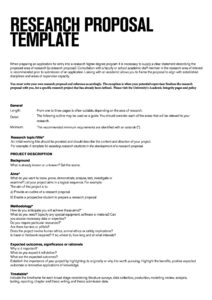
Beyond the introduction, a successful research proposal delves into the technicalities of your plan, reassuring reviewers of your project’s feasibility and rigor. This section encompasses your literature review, methodology, ethical considerations, timeline, and budget, each playing a critical role in painting a complete picture of your proposed work.
The literature review demonstrates your understanding of the existing body of knowledge related to your topic. It’s not merely a summary of previous studies but a critical analysis that identifies key theories, research findings, and, crucially, the gaps that your research intends to fill. This section shows that you are well-versed in your field and that your project is built upon a solid academic foundation, contributing something new and meaningful.
Your methodology section is the blueprint of your research. Here, you detail exactly how you plan to answer your research question and achieve your objectives. This includes your research design, participants or data sources, data collection methods, and data analysis strategies. Precision and justification are key; explain why you’ve chosen particular approaches over others and how they align with your research aims. For anyone looking at an academic research project proposal template, this part is often the most detailed.
- Research Design: Qualitative, quantitative, mixed-methods, experimental, descriptive.
- Participants or Sampling: Who or what will you study, and how will you select them?
- Data Collection: Surveys, interviews, observations, archival research, experiments.
- Data Analysis: Statistical tests, thematic analysis, discourse analysis.
- Ethical Considerations: How will you protect participants, ensure anonymity, and gain necessary approvals?
Finally, a compelling proposal includes a realistic timeline and a detailed budget. The timeline outlines the key stages of your project, from literature review to data collection, analysis, and dissemination, showing that your project is manageable within a specified period. The budget, conversely, provides a transparent breakdown of the resources required, demonstrating careful planning and fiscal responsibility. These practical components assure reviewers that your brilliant idea is also a practical and achievable endeavor.
Mastering these core components ensures that your proposal is not just an idea, but a well-thought-out plan of action. It reflects your readiness to undertake rigorous academic inquiry and provides the necessary assurances to those who will ultimately decide the fate of your project. By carefully structuring and detailing each section, you enhance the credibility and persuasiveness of your submission, paving the way for a successful research journey.
Approaching your proposal with a strategic mindset, utilizing a clear structure, and paying attention to every detail will undoubtedly elevate your work. Remember, a well-crafted proposal is a testament to your commitment and foresight, setting a strong precedent for the quality of the research you intend to conduct.