Keeping complex projects on track and ensuring everyone, especially leadership, is in the loop can feel like a high-wire act. Project managers are constantly juggling deadlines, resources, and unforeseen challenges, all while needing to communicate progress effectively. The challenge intensifies when you need to distill all this intricate information into something concise, clear, and actionable for busy executives who might not have hours to pore over detailed reports.
Executives need snapshots, not entire albums. They require key insights that highlight the health of a project, flag potential issues, and illuminate decisions that need to be made, often with limited time and attention. Simply put, they need the ‘what’ and the ‘why,’ not every granular ‘how.’ This is where the power of a well-structured communication tool becomes indispensable.
That’s precisely why having a reliable, consistent executive project status report template is not just a nice-to-have, but a crucial component of successful project governance. It bridges the gap between the operational details on the ground and the strategic oversight required by senior management, ensuring everyone is aligned and projects move forward with purpose.
What Makes an Executive Project Status Report Truly Effective?
An effective executive project status report isn’t just a collection of facts; it’s a strategic communication tool. Its primary goal is to provide a high-level overview that enables executives to quickly grasp the project’s status, identify risks, and make informed decisions without getting bogged down in minutiae. Think of it as a dashboard that highlights the most critical indicators, allowing leadership to focus their attention where it’s most needed. It needs to be brief, clear, and actionable, presenting the narrative of the project’s journey in an easily digestible format.
Key Elements to Include
When crafting your report, certain sections are non-negotiable for executive-level communication. These ensure that regardless of the project’s specifics, the core information needed for strategic oversight is always present.
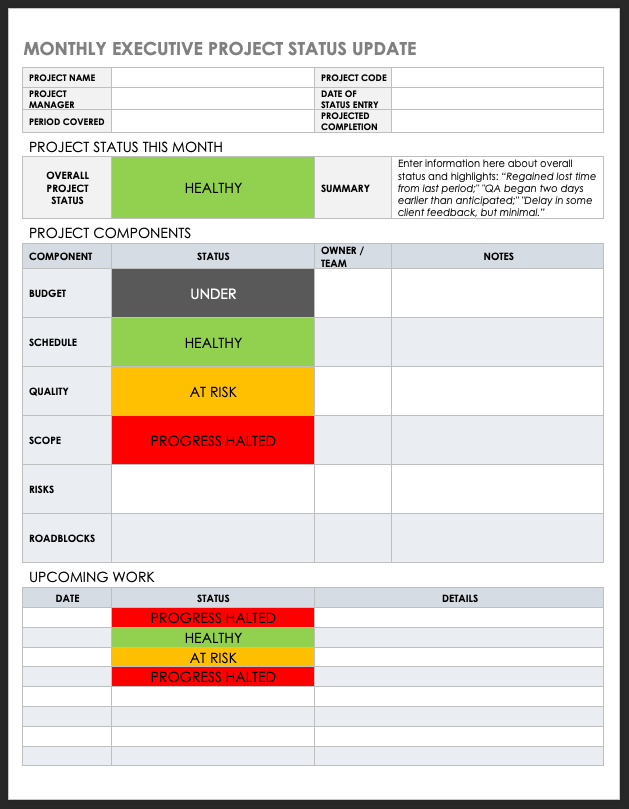
- Project Summary and Overall Health: This is your elevator pitch for the entire report. A quick, color-coded status (Green, Yellow, Red) indicating the project’s overall health is incredibly valuable. Follow this with a brief narrative explaining the current situation, highlighting major successes or concerns at a glance.
- Key Milestones and Progress: Executives want to see progress. Outline key milestones achieved since the last report and upcoming milestones. This section should clearly show how the project is advancing towards its ultimate goals.
- Budget and Resource Status: A succinct overview of the financial health and resource allocation is crucial. Are we on budget, over budget, or under budget? Are resources adequately allocated or are there significant overruns or shortages?
- Risks and Issues: This is perhaps one of the most critical sections. Proactively identify high-impact risks and major issues that could derail the project. More importantly, outline the proposed mitigation strategies or the actions being taken to resolve these issues. Don’t just present problems; offer solutions or request guidance.
- Decisions Needed / Action Items for Executives: This is where you directly engage leadership. Clearly state any decisions that require executive input or approval, and specify what actions you need them to take to keep the project moving forward. Clarity here is paramount to avoid delays.
The ideal executive project status report template will seamlessly integrate these elements, making it simple for project managers to populate and for executives to review. It should be designed for quick scanning, using visuals like charts and graphs where appropriate to convey complex data rapidly. Remember, time is a premium for executives, so every word and visual element must serve a purpose.
Crafting Your Executive Project Status Report Template for Success
Developing an executive project status report template that truly serves your organization requires more than just picking a layout. It involves understanding your audience, standardizing your reporting, and making it easy to use consistently. The best templates aren’t static; they evolve with the organization’s needs and the types of projects being managed. They provide a framework that ensures critical information is always captured and presented in a way that resonates with senior leadership, fostering trust and clarity.
Consider the various formats available. While a simple document is often a good starting point, some organizations benefit from more dynamic solutions. Depending on the complexity of your projects and the tech fluency of your executive team, you might opt for:
- Standard Document Format: A Word or Google Docs file is easy to create and share, making it accessible to everyone.
- Spreadsheet-Based: Excel or Google Sheets can be powerful for tracking metrics and using formulas to automate status updates.
- Presentation Slides: PowerPoint or Google Slides offer a visual-first approach, perfect for meetings where a quick presentation accompanies the report.
- Project Management Software Dashboards: Many modern tools like Jira, Asana, or Monday.com offer built-in executive dashboard features that update in real-time.
Ultimately, the goal is to create a template that not only meets the specific informational needs of your executives but also fits seamlessly into your project management workflow. A well-defined executive project status report template should reduce the effort required to compile reports while significantly increasing their impact and utility. It ensures that communication is always purposeful, leading to better project outcomes and more confident strategic decisions.
Effective project communication is the bedrock of successful project delivery. By consistently providing clear, concise, and actionable insights to your leadership team, you empower them to make informed decisions that steer projects towards their objectives. A robust reporting mechanism acts as a critical link, fostering transparency and accountability across all levels of the organization.
The effort invested in developing and utilizing a streamlined reporting process pays dividends in enhanced decision-making and increased project success rates. It transforms potential confusion into clarity, enabling executives to focus on strategy and support, knowing that the operational details are being managed and communicated effectively.