Starting a science fair project can feel like a massive undertaking, but with the right preparation, it becomes an exciting journey of discovery. One of the most crucial first steps is crafting a solid proposal, and that is where a well-designed science fair project proposal template comes in handy. It is your roadmap, guiding you through the initial planning stages and ensuring you have a clear vision before you even pick up a beaker or plant a seed.
Think of your proposal as your project’s blueprint. It is not just a formality; it is a vital tool for organizing your thoughts, outlining your scientific inquiry, and getting approval from your teacher or mentor. A good proposal demonstrates that you have thought critically about your project, from the question you aim to answer to the methods you will employ, showing a clear understanding of the scientific method.
Without a clear plan, even the most brilliant idea can lose its way. This article is designed to help you understand the essential components of an effective science fair project proposal and how to use a template to streamline your planning process, ensuring you are set up for success from day one and ready to tackle your scientific exploration.
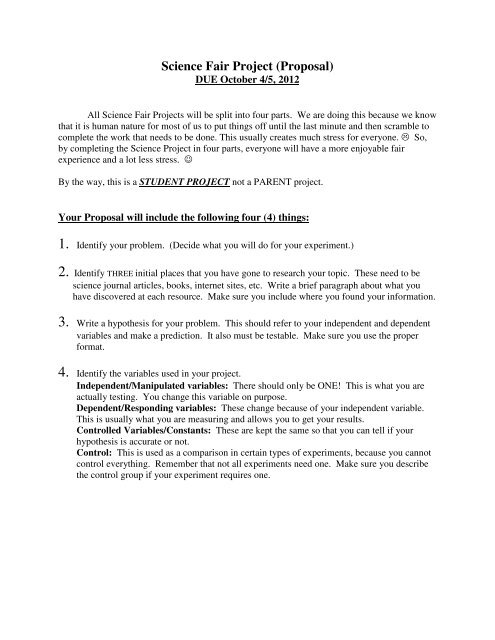
Dissecting the Core Components of a Stellar Science Fair Proposal
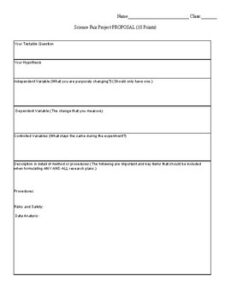
Every great science fair project begins with a well-structured proposal. This document is more than just a summary; it is a detailed outline of your scientific journey, laying the groundwork for your entire investigation. Let us break down the essential sections you will typically find in a comprehensive science fair project proposal template, ensuring you cover all your bases and impress your judges right from the start.
Project Title and Identification
Kicking things off, you will need a clear, concise, and engaging title for your project. This title should be informative, giving a hint about what your experiment is all about, and ideally, spark some curiosity. Avoid overly long or vague titles that do not convey your project’s essence. Below that, always include your name, grade level, school name, and your supervising teacher’s name. This simple section ensures everyone knows who is behind this brilliant idea and who to contact for any questions.
Introduction or Abstract
This is where you grab your reader’s attention and provide a brief, compelling overview of your project. The introduction should explain the background information relevant to your chosen topic, why you chose this particular area of study, and what broader significance your research might have. You are essentially telling a mini-story of your scientific interest, explaining the context that led you to your research question. For younger students, a simpler explanation of the topic’s relevance and a brief statement of purpose are perfectly fine.
Research Question and Hypothesis
At the absolute heart of every science project is a question you genuinely want to answer. Your research question needs to be specific, measurable, achievable, relevant, and time-bound (SMART). It should guide your entire experimental design and be clearly articulated. Following that, you will formulate a hypothesis – an educated guess or a testable prediction about what you think the outcome of your experiment will be, based on your prior research or existing scientific principles. It is often stated as an “If…then…because…” statement, clearly outlining the independent and dependent variables and the reasoning behind your prediction.
Materials and Procedures
This section is all about the “how.” You need to list every single material, piece of equipment, and any specific chemicals or organisms you will need for your experiment, no matter how small. Be incredibly precise with quantities, measurements, and specifications. Then, detail the step-by-step procedure you will follow. This sequence of actions should be so clear and complete that anyone else, by simply reading your instructions, could replicate your experiment exactly. Remember to include important considerations like control groups, constants, and the number of trials. Crucially, any safety precautions you plan to take must also be clearly outlined here, demonstrating your awareness of potential risks.
Expected Results and Data Analysis
Even before you conduct a single experiment, you should thoughtfully consider what kind of results you anticipate. This demonstrates a strong understanding of your hypothesis and the underlying scientific principles at play. More importantly, you need to articulate how you plan to analyze the data you collect. Will you use tables, graphs (bar, line, scatter plot?), or perhaps more advanced statistical analysis? This section shows that you have considered the scientific method fully and have a robust plan for interpreting your findings, demonstrating forethought and scientific rigor in your approach.
Bibliography or References
Science does not happen in a vacuum; it builds on existing knowledge and the work of others. In this essential section, you will list all the sources you consulted during your background research phase. This includes books, scientific journals, reputable websites, interviews with experts, and any other materials that informed your project. Citing your sources correctly is not only good academic practice and avoids plagiarism but also helps establish the credibility and depth of your project, showing you have done your homework and understand the existing scientific landscape.
Mastering Your Proposal: Tips for Impact
Now that we have walked through the fundamental components of a proposal, let us dive into some practical advice to help you craft a document that truly stands out. It is one thing to include all the sections; it is another to make them shine, making a lasting impression on anyone who reads your submission.
Clarity and Conciseness are Key
Your proposal should be easy to understand and free of jargon whenever possible. Use clear, direct language that communicates your ideas effectively. While thoroughness is important, avoid unnecessary fluff or repetitive phrases. Every sentence should contribute meaningfully to explaining your project. Think of it as telling your project’s story in the most efficient and engaging way possible, allowing judges and teachers to quickly grasp your concept without getting lost in overly complex phrasing.
Organization and Presentation Matter
A well-organized proposal is a joy to read and reflects positively on your work ethic. Use clear headings and subheadings (like the H3s we have discussed) to break up your text and make it scannable. Ensure consistent formatting throughout, including font styles and spacing, for a professional look. Proofread meticulously for any grammar, spelling, or punctuation errors. A polished presentation reflects your dedication and attention to detail, showing that you take your work seriously and value the effort put into communicating your scientific ideas.
Review and Feedback
Before submitting, always take the time to review your proposal thoroughly. Better yet, ask a parent, teacher, or friend to read it over. A fresh pair of eyes can often spot errors, areas of confusion, or points that could be clarified, which you might have overlooked. Constructive feedback is invaluable for refining your ideas and making your proposal even stronger, ensuring your message is as clear and impactful as possible. Remember, the goal is not just to have a proposal, but to have an exceptional one that clearly articulates your scientific vision.
Developing a strong science fair project proposal is not just about ticking boxes; it is a foundational exercise that sets the stage for genuine scientific inquiry and discovery. By thoughtfully completing each section, you are not only preparing for your project but also honing critical thinking, planning, and communication skills that will serve you well in all areas of life, far beyond the science fair itself.
So, as you embark on your scientific adventure, remember the power of a well-crafted plan. It transforms abstract ideas into concrete steps, giving you the confidence and clarity needed to pursue your questions with enthusiasm and rigor. Here’s to exploring the wonders of science and making impactful discoveries through careful preparation and a well-structured approach!