Bringing a cinematic vision to life is an exhilarating journey, but it’s also a complex financial endeavor. Without stringent fiscal oversight, even the most promising projects can quickly derail due to budget overruns. This is precisely why a well-structured film production cost report template is not just a useful tool, but an absolute necessity for every filmmaker, producer, and production company. It serves as your financial compass, guiding you through the often turbulent waters of movie budgeting and expenditure tracking.
This comprehensive guide will delve into the critical role of robust financial reporting in filmmaking. We will explore why a detailed budget template is essential, break down its key components, and even provide a sample film production cost report template format to help you understand its structure. By the end, you will have a clear understanding of how to leverage such a tool to maintain financial control, ensure transparency, and ultimately, bring your project to fruition within its allocated resources.
Why a Detailed Film Production Budget Template is Essential
The world of film production is dynamic, with countless variables influencing costs from conception to delivery. Relying on guesswork or informal tracking can lead to severe financial distress, jeopardizing the entire project. A meticulously crafted film production budget template provides the framework needed for accurate forecasting, real-time expense monitoring, and informed decision-making.
Navigating Financial Complexities in Filmmaking
Filmmaking involves managing a vast array of expenses across multiple departments and phases. From pre-production planning to post-production finishing, costs accumulate rapidly and often unexpectedly. A structured cost report allows you to categorize and track every single penny spent. This detailed breakdown ensures nothing is overlooked and helps you understand where your money is truly going.
Ensuring Investor Confidence and Accountability
Investors are the lifeblood of most film projects, and they demand transparency and accountability. A professional film production cost report template clearly demonstrates that you are in control of the finances. Providing regular, easy-to-understand financial reports builds trust, reassures stakeholders, and can be crucial for securing additional funding or future partnerships. It showcases your commitment to fiscal responsibility.
Proactive Cost Control and Decision Making
One of the most powerful benefits of an effective cost report is the ability to compare actual expenditures against budgeted amounts in real-time. This comparison allows you to identify potential overruns early on. Early detection means you can make timely adjustments, reallocate resources, or seek alternative solutions before problems escalate. It transforms reactive problem-solving into proactive financial management.
Key Components of a Comprehensive Film Production Cost Report
An effective film production cost report breaks down expenses into logical categories, mirroring the typical phases of filmmaking. This systematic approach ensures that every aspect of production, from the earliest stages to final delivery, is accounted for. Understanding these core components is crucial for building or utilizing any film budgeting template effectively.
Categorizing Pre-Production Expenses
Pre-production sets the stage for the entire film and incurs significant initial costs. These expenses must be meticulously tracked as they lay the foundation for the main shoot. A robust template will itemize these costs clearly.
Common pre-production categories include:
- Script Development: Writer fees, story rights, script doctoring.
- Producer & Director Fees: Initial salaries or advances for key creative personnel.
- Casting: Casting director fees, audition space rental, talent search expenses.
- Location Scouting: Travel, accommodation, permits, and fees for potential filming sites.
- Legal & Insurance: Incorporation fees, contracts, errors and omissions insurance.
- Storyboarding & Concept Art: Fees for artists developing visual representations of the script.
Tracking Principal Photography Costs
This phase typically represents the largest portion of a film’s budget and requires the most detailed tracking. Daily costs can fluctuate wildly depending on crew size, equipment, and location. Accurate tracking during this period is paramount.
Essential principal photography cost categories often include:
- Crew Salaries & Wages: Day rates or weekly salaries for all on-set personnel (director of photography, gaffers, grips, sound mixers, etc.).
- Talent Salaries: Payments to actors, including fringes and residuals.
- Equipment Rental: Cameras, lighting packages, sound gear, grip equipment, vehicles.
- Set Design & Construction: Materials, labor for building sets, dressing locations.
- Props & Wardrobe: Purchase or rental of props, costumes, hair and makeup supplies.
- Catering & Craft Services: Food and beverages for cast and crew on set.
- Travel & Accommodation: Flights, hotels, per diems for cast and crew.
- Location Fees & Permits: Payments for filming at specific locations, police detail, road closures.
Managing Post-Production and Delivery Expenses
Once filming wraps, a new wave of expenses begins to transform raw footage into a polished film. These costs can be substantial and varied, often extending long after physical production has ended. A good expense report anticipates these ongoing financial demands.
Key post-production and delivery cost categories include:
- Editing: Editor fees, assistant editor fees, editing suite rental.
- Sound Design & Mixing: Sound editors, foley artists, mixers, studio rental.
- Visual Effects (VFX): CGI artists, software licenses, render farm costs.
- Color Grading: Colorist fees, grading suite rental.
- Music: Composer fees, music licensing for existing tracks, studio time.
- Graphics & Titles: Motion graphics artists, title design.
- Deliverables: Creating DCPs, master files, various broadcast and distribution formats.
- Marketing & Distribution: Festival submission fees, public relations, trailer production, poster design, theatrical release costs, digital distribution fees.
Sample Film Production Cost Report Template Breakdown
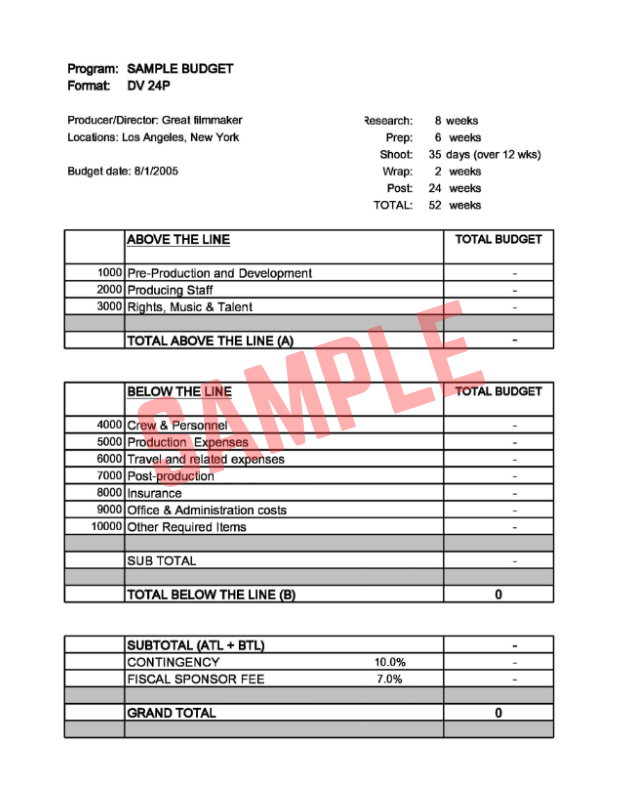
A practical film production cost report template goes beyond just listing categories; it provides a structure for comparing what you planned to spend against what you actually spent. This variance analysis is where the real power of the template lies, allowing for real-time financial adjustments. Below is a simplified textual representation of how such a report might be structured, focusing on clarity and functionality.
Imagine your report segmented by production phase, with each phase broken down into specific departments or line items. For each line item, you’d track multiple financial data points. This approach offers both high-level summaries and granular detail as needed.
Here’s a conceptual look at a typical structure:
FILM PRODUCTION COST REPORT TEMPLATE

Project Title: [Your Film's Title]
Report Date: [Current Date]
Budget Prepared By: [Name/Department]

--------------------------------------------------------------------------------------
SECTION: A. PRE-PRODUCTION
--------------------------------------------------------------------------------------

Category: 1. DEVELOPMENT
    Line Item                 Budgeted Amount       Actual Spend        Variance
    ------------------------- ------------------- ------------------- -------------------
    1.1 Writer's Fees         $XX,XXX.XX            $XX,XXX.XX            $X,XXX.XX
    1.2 Story Rights          $X,XXX.XX             $X,XXX.XX             $X.XX
    1.3 Legal Fees (Dev.)     $X,XXX.XX             $X,XXX.XX             $X.XX
    Subtotal Development      $XX,XXX.XX            $XX,XXX.XX            $X,XXX.XX

Category: 2. PRODUCTION OFFICE & SUPPORT
    Line Item                 Budgeted Amount       Actual Spend        Variance
    ------------------------- ------------------- ------------------- -------------------
    2.1 Producer Fees         $XX,XXX.XX            $XX,XXX.XX            $X.XX
    2.2 Director Fees         $XX,XXX.XX            $XX,XXX.XX            $X.XX
    2.3 Casting Director      $X,XXX.XX             $X,XXX.XX             $X.XX
    2.4 Office Rental/Supplies $X,XXX.XX             $X,XXX.XX             $X.XX
    Subtotal Office Support   $XX,XXX.XX            $XX,XXX.XX            $X,XXX.XX

... (Continue with more detailed categories for Pre-Production, e.g., Locations, Insurance)

--------------------------------------------------------------------------------------
SECTION: B. PRINCIPAL PHOTOGRAPHY
--------------------------------------------------------------------------------------

Category: 1. CREW SALARIES & FRINGES
    Line Item                 Budgeted Amount       Actual Spend        Variance
    ------------------------- ------------------- ------------------- -------------------
    1.1 Director of Photo     $XX,XXX.XX            $XX,XXX.XX            $X.XX
    1.2 Camera Dept.          $XX,XXX.XX            $XX,XXX.XX            $X,XXX.XX
    1.3 Grip & Electric       $XX,XXX.XX            $XX,XXX.XX            $X.XX
    1.4 Sound Dept.           $X,XXX.XX             $X,XXX.XX             $X.XX
    Subtotal Crew             $XXX,XXX.XX           $XXX,XXX.XX           $X,XXX.XX

Category: 2. EQUIPMENT & RENTALS
    Line Item                 Budgeted Amount       Actual Spend        Variance
    ------------------------- ------------------- ------------------- -------------------
    2.1 Camera Package        $X,XXX.XX/wk x 4      $X,XXX.XX             $X.XX
    2.2 Lighting Package      $X,XXX.XX/wk x 4      $X,XXX.XX             $X.XX
    2.3 Sound Equipment       $X,XXX.XX/wk x 4      $X,XXX.XX             $X.XX
    Subtotal Equipment        $XX,XXX.XX            $XX,XXX.XX            $X.XX

... (Continue with more detailed categories for Principal Photography, e.g., Locations, Travel, Art Dept., Catering, Talent)

--------------------------------------------------------------------------------------
SECTION: C. POST-PRODUCTION
--------------------------------------------------------------------------------------

Category: 1. EDITING
    Line Item                 Budgeted Amount       Actual Spend        Variance
    ------------------------- ------------------- ------------------- -------------------
    1.1 Editor Fees           $XX,XXX.XX            $XX,XXX.XX            $X.XX
    1.2 Assistant Editor      $X,XXX.XX             $X,XXX.XX             $X.XX
    1.3 Editing Suite         $X,XXX.XX             $X,XXX.XX             $X.XX
    Subtotal Editing          $XX,XXX.XX            $XX,XXX.XX            $X.XX

... (Continue with more detailed categories for Post-Production, e.g., Sound, VFX, Music, Color Correction)

--------------------------------------------------------------------------------------
SECTION: D. OTHER EXPENSES (Marketing, Legal, Contingency, etc.)
--------------------------------------------------------------------------------------

Category: 1. MARKETING & DISTRIBUTION
    Line Item                 Budgeted Amount       Actual Spend        Variance
    ------------------------- ------------------- ------------------- -------------------
    1.1 Festival Fees         $X,XXX.XX             $X,XXX.XX             $X.XX
    1.2 Public Relations      $X,XXX.XX             $X,XXX.XX             $X.XX
    1.3 Trailer Production    $X,XXX.XX             $X,XXX.XX             $X.XX
    Subtotal Mkt & Dist       $XX,XXX.XX            $XX,XXX.XX            $X.XX

Category: 2. CONTINGENCY
    Line Item                 Budgeted Amount       Actual Spend        Variance
    ------------------------- ------------------- ------------------- -------------------
    2.1 Contingency (10%)     $XX,XXX.XX            $X,XXX.XX             $XX,XXX.XX
    Subtotal Contingency      $XX,XXX.XX            $X,XXX.XX             $XX,XXX.XX

--------------------------------------------------------------------------------------
GRAND TOTALS
--------------------------------------------------------------------------------------

Total Budgeted Project Cost:    $XXX,XXX.XX
Total Actual Project Spend:     $XXX,XXX.XX
Overall Project Variance:       $X,XXX.XX
This textual sample illustrates the essential columns: “Line Item,” “Budgeted Amount,” “Actual Spend,” and “Variance.” The “Variance” column is critical, showing the difference between your planned budget and your actual spending for each item. A positive variance means you spent less than budgeted, while a negative variance indicates an overspend. Regularly reviewing these variances enables agile financial management, allowing you to make informed decisions and adjust spending in other areas to stay within your overall budget.
Successfully navigating the financial landscape of film production hinges on meticulous planning and rigorous tracking. The consistent use of a robust film production cost report template transforms a daunting task into a manageable process. By adopting such a system, filmmakers and producers can gain unparalleled clarity into their project’s financial health, fostering an environment of control and confidence.
Embrace the power of detailed financial reporting to protect your creative vision and ensure your film project’s financial viability. Implementing a well-organized cost tracking system will not only streamline your current production but also provide invaluable data for future projects. Start by exploring and customizing a template that suits your specific needs, laying a solid financial foundation for your next cinematic masterpiece.