In complex manufacturing and engineering projects, ensuring equipment meets specified requirements before leaving the factory is paramount. A Factory Acceptance Test (FAT) serves as a critical checkpoint, verifying functionality, performance, and compliance. However, the value of a FAT is only as strong as its documentation, which is where a robust factory acceptance test report template becomes indispensable. This template provides a structured way to record findings, identify deviations, and secure stakeholder approval, preventing costly delays and disputes down the line.
The process of conducting a FAT is an investment in quality assurance, but without proper record-keeping, its benefits can be severely diminished. A comprehensive report captures every detail, from the initial setup to the final sign-off, creating an immutable record of the equipment’s condition and performance at the point of manufacture. This article will explore the significance of such reports, delve into their key components, and provide a clear sample layout to guide your documentation efforts. Understanding and utilizing an effective factory acceptance test report template is a cornerstone of successful project delivery and risk management.
Understanding the Importance of a Robust Factory Acceptance Test Report
A well-executed Factory Acceptance Test (FAT) is a crucial step in ensuring that new equipment or systems meet contractual obligations and operational expectations. The report generated from this process is not merely paperwork; it is a vital document that secures project integrity. Relying on a standardized and robust template for these reports elevates their value significantly.
Ensuring Equipment Compliance and Performance
The primary goal of any FAT is to verify that equipment performs as specified and complies with all relevant standards and regulations. A detailed factory acceptance test report acts as documented proof of this verification. It systematically records whether each functional requirement, safety feature, and performance metric has been met, or where deviations exist.
This meticulous documentation helps to confirm that the equipment is fit for purpose before it even leaves the vendor’s facility. It prevents the costly and time-consuming process of discovering major issues during on-site commissioning, which can lead to significant project setbacks. For instance, according to a survey by Project Management Institute, inadequate requirements management, often identified through thorough testing, is a major contributor to project failure.
Mitigating Risks and Costly Delays
Identifying defects or non-conformities at the factory significantly reduces risks associated with installation and start-up. Issues caught during FAT can be rectified by the manufacturer under controlled conditions, avoiding the logistical challenges and expenses of field repairs. A comprehensive factory acceptance test report clearly outlines these findings, ensuring they are addressed proactively.
Without proper documentation, overlooked issues can cascade into operational failures, warranty claims, and budget overruns. The report serves as a formal record of what was found and what corrective actions were agreed upon, providing a clear audit trail. This proactive approach minimizes potential project delays and helps maintain project schedules and budgets.
Facilitating Clear Communication and Accountability
The factory acceptance test report is a powerful communication tool among all stakeholders, including the client, vendor, and any third-party inspectors. It presents an objective overview of the test results, ensuring everyone has the same understanding of the equipment’s status. Clear documentation prevents misunderstandings and provides a factual basis for discussions.
Furthermore, the report establishes accountability for identified issues. It typically details who is responsible for addressing each non-conformity and the agreed-upon timelines for resolution. The formal sign-off sections within the report solidify acceptance or rejection, creating a legally defensible record for all parties involved. This clarity fosters trust and efficient problem-solving.
Key Elements of an Effective Factory Acceptance Test Report Template
Creating a truly effective factory acceptance test report requires more than just noting down observations. It demands a structured approach that covers all critical aspects of the testing process. A well-designed factory acceptance test report template ensures consistency, completeness, and clarity across all projects.
Administrative and Project Details
The opening section of any good template should provide all essential identifying information. This includes the project name, unique equipment identification numbers, and relevant contract details. Accurate record-keeping here ensures the report can be easily referenced and linked to specific projects or purchase orders.
Crucially, this section also lists all personnel present during the FAT, including representatives from the vendor, client, and any independent inspectors. Dates and locations of the tests are also recorded. This foundational data provides context and verifies the authenticity of the report, ensuring all involved parties are clearly identified.
Test Procedures and Criteria
This segment details exactly what was tested and against which standards or specifications. It should clearly reference the approved FAT plan, specific drawings, data sheets, and any applicable industry codes or regulatory standards. Outlining the test criteria explicitly helps to prevent disputes regarding test outcomes.
- List of specific functional tests performed.
- Performance metrics checked (e.g., speed, capacity, efficiency).
- Safety checks and emergency stop verifications.
- Compliance with environmental or quality standards.
- Specific pass/fail criteria for each test point.
Test Results and Observations
This is the core of the report, where the actual outcomes of each test are meticulously recorded. For every test procedure outlined, the corresponding result must be documented. This includes both successful outcomes and any deviations or non-conformities observed. Detailed descriptions of any issues are vital.
Observations should be objective and backed by evidence, such as photographs, video recordings, or data logs from monitoring equipment. It is also good practice to assign a severity level to each non-conformity (e.g., minor, major, critical). This helps prioritize corrective actions and gives a clear picture of the equipment’s readiness.
Action Items and Signatures
The conclusion of the report synthesizes the findings into actionable steps. For any non-conformities identified, specific corrective actions must be documented, along with the responsible party and a proposed completion deadline. This ensures that issues are addressed systematically.
Finally, the report culminates in a formal acceptance or rejection status for the equipment, based on the FAT results. Signature blocks for all participating stakeholders, including the vendor, client, and any third-party inspectors, are essential. These signatures signify agreement with the reported findings and the agreed-upon course of action, formalizing the entire FAT process.
Sample Factory Acceptance Test Report Template Layout
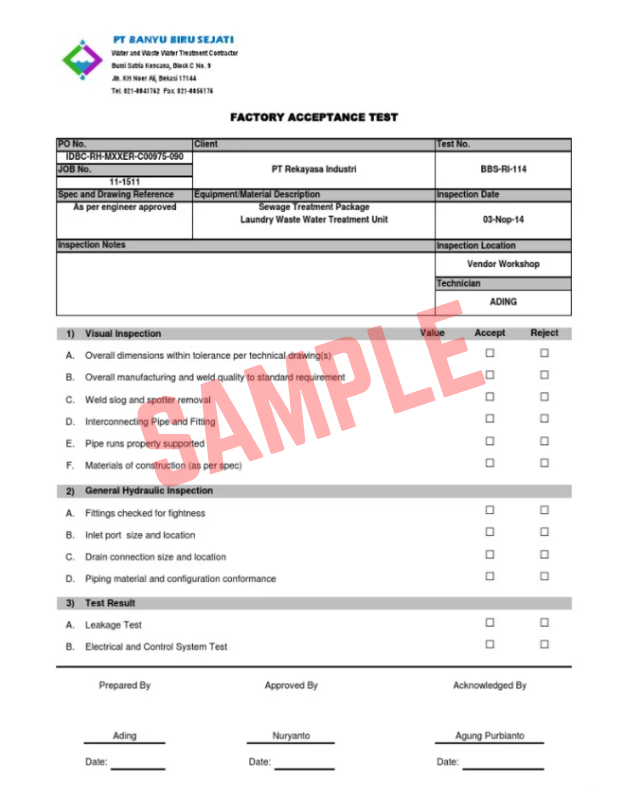
A practical factory acceptance test report template provides a structured framework for documenting all critical information gathered during the testing phase. The following layout illustrates the essential sections and typical content that should be included to ensure comprehensive and clear reporting. This format helps users to efficiently record and review test outcomes, facilitating informed decisions regarding equipment acceptance.
| FACTORY ACCEPTANCE TEST REPORT | |||||
|---|---|---|---|---|---|
| Report ID: | [Unique Report Number] | ||||
| Date of Report: | [YYYY-MM-DD] | ||||
| Project Name: | [e.g., Expansion Project Phase 2] | ||||
| Equipment/System Name: | [e.g., Automated Packaging Line] | ||||
| Equipment ID/Serial No: | [e.g., AP-L2023-001] | ||||
| Vendor Name: | [e.g., Global Manufacturing Solutions] | ||||
| Client Name: | [e.g., Acme Corporation] | ||||
| FAT Location: | [Vendor’s Facility Address] | ||||
| FAT Dates: | [Start Date] to [End Date] | ||||
| Attendees: |
|
||||
| 2. Referenced Documents & Standards | |||||
| FAT Plan Document No: | [e.g., GMS-FAT-PLN-005] | ||||
| Purchase Order No: | [e.g., ACME-PO-23-0123] | ||||
| Specifications/Drawings: | [List relevant documents e.g., Spec Sheet V3.0, Drawing 12345-RevA] | ||||
| Applicable Standards: | [e.g., ISO 9001, IEC 61131, CE Marking] | ||||
| 3. Test Procedures and Results | |||||
| Test Item / Procedure | Expected Result / Criteria | Actual Result / Observation | Pass/Fail | Severity (if Fail) | Evidence Reference |
| 3.1 Power-up and Initial Checks | Unit powers on, no error codes, indicator lights green. | Unit powered on, all lights green. | PASS | N/A | Photo_001.jpg |
| 3.2 Functional Test: [Specific Function 1] | [Detailed Expected Behavior] | [Detailed Actual Behavior] | [PASS/FAIL] | [N/A / Minor / Major / Critical] | [e.g., Log_Funct1.csv] |
| 3.3 Performance Test: [Specific Metric] | [Min/Max Value or Range] | [Actual Measured Value] | [PASS/FAIL] | [N/A / Minor / Major / Critical] | [e.g., Video_Perf2.mp4] |
| 3.4 Safety Test: E-Stop Operation | Equipment stops immediately, power cut. | E-Stop engaged, equipment stopped after 2s delay. | FAIL | Major | Photo_EStop_002.jpg |
| 4. Non-Conformities / Deviations Identified | |||||
| Description of Non-Conformity: | E-Stop delay exceeds specified 1s response time. | ||||
| Severity: | Major | ||||
| Recommended Corrective Action: | Adjust E-Stop logic/hardware to meet 1s response. Re-test E-Stop function. | ||||
| Responsible Party: | Vendor (Global Manufacturing Solutions) | ||||
| Target Completion Date: | [YYYY-MM-DD] | ||||
| 5. Conclusion & Acceptance Status | |||||
Based on the Factory Acceptance Test results documented above, the equipment [Automated Packaging Line] (ID: AP-L2023-001) has been:
All identified non-conformities and agreed-upon corrective actions are detailed in Section 4. |
|||||
| 6. Signatures of Approval | |||||
| Client Representative: | Vendor Representative: | ||||
| ___________________________ | ___________________________ | ||||
| [Printed Name, Title] | [Printed Name, Title] | ||||
| Date: [YYYY-MM-DD] | Date: [YYYY-MM-DD] | ||||
This structured approach ensures that every aspect of the FAT is thoroughly documented. Utilizing this kind of framework makes the report easy to understand, provides a clear record for audit purposes, and streamlines the process of resolving any identified issues. It transforms the Factory Acceptance Test from a mere procedure into a comprehensive project assurance tool.
Implementing a well-designed factory acceptance test report template is more than just good practice; it’s a strategic move to safeguard your investments and ensure project success. These templates provide a consistent, clear, and comprehensive framework for documenting the critical verification process. By meticulously detailing administrative information, test procedures, results, and necessary actions, they eliminate ambiguity and foster transparent communication among all stakeholders.
Leveraging such a template helps in identifying potential issues early, mitigating costly delays, and ensuring that your equipment meets all contractual and performance requirements before it leaves the factory floor. Don’t leave your equipment acceptance to chance or fragmented documentation. Download and adapt a robust factory acceptance test report template for your next project to streamline your quality assurance process and protect your project’s integrity.