In the demanding world of commercial transportation, safety and compliance are not just buzzwords; they are fundamental pillars of successful operations. Neglecting routine vehicle inspections can lead to serious accidents, costly fines, and significant operational downtime. This is precisely why a reliable driver vehicle inspection report template is an indispensable tool for every fleet manager and professional driver. It ensures that every vehicle on the road meets stringent safety standards before and after each journey.
A comprehensive daily vehicle inspection report (DVIR) helps identify potential mechanical defects or safety issues before they escalate. By documenting these checks meticulously, companies can safeguard their drivers, protect public safety, and maintain a high level of operational efficiency. This article will explore the critical importance of these reports, detail the essential components of an effective template, and provide a practical sample for immediate use.
Understanding how to implement and utilize a robust pre-trip and post-trip inspection checklist is key to preventing preventable breakdowns and staying compliant with regulatory bodies. We will delve into best practices for ensuring these inspections are thorough and effective, ultimately contributing to a safer and more productive fleet.
The Critical Role of Daily Vehicle Inspections
Daily vehicle inspections are far more than a mere bureaucratic formality; they are a cornerstone of fleet safety and operational integrity. These routine checks protect drivers and the public by catching potential issues before they become hazards on the road. A well-executed inspection prevents accidents and ensures every vehicle operates at peak performance.
Implementing a standardized driver vehicle inspection report template allows for consistency across an entire fleet. This consistency helps to streamline the inspection process, making it easier for drivers to conduct thorough checks and for maintenance teams to track and address identified defects promptly. It’s a proactive approach to fleet management.
Ensuring Road Safety and Compliance
Adhering to strict safety regulations is paramount for commercial vehicle operators. Regulatory bodies, such as the Federal Motor Carrier Safety Administration (FMCSA) in the United States, mandate pre-trip and post-trip inspections to ensure vehicles are in safe operating condition. Failing to comply with these rules can result in substantial penalties and legal repercussions.
A detailed inspection template provides tangible proof of compliance, safeguarding your business during audits. It demonstrates a commitment to safety, which is invaluable for your reputation and insurance premiums. These checks help prevent catastrophic failures that could lead to injuries or fatalities.
Identifying Defects Before They Cause Downtime
Preventative maintenance is significantly more cost-effective than emergency repairs. Daily inspections allow drivers to identify minor issues, such as worn tires or faulty lights, before they escalate into major breakdowns. This proactive approach minimizes unexpected maintenance costs and reduces vehicle downtime.
By catching problems early, repairs can be scheduled efficiently, avoiding disruptions to delivery schedules and customer commitments. A robust inspection program keeps your vehicles on the road, where they belong, maximizing productivity and profitability. The right template makes this process straightforward and effective.
Legal Protection and Audit Readiness
Having a meticulously completed driver vehicle inspection report template offers crucial legal protection. In the event of an accident, these reports serve as vital documentation, demonstrating that the vehicle was deemed safe before its operation. This can mitigate liability and support your legal defense.
Furthermore, regulatory compliance audits require demonstrable proof of vehicle safety. Organized and accurate DVIRs are essential for passing these audits without incident, helping companies avoid fines and maintain their operating authority. They are a clear record of due diligence.
Key Elements of an Effective Driver Vehicle Inspection Report Template
A truly effective driver vehicle inspection report template goes beyond a simple checklist; it is a structured document designed to capture all necessary information comprehensively. Its design should facilitate ease of use for drivers while providing actionable data for maintenance teams. The clarity and completeness of the template directly impact the quality of inspections.
Poorly designed templates can lead to overlooked defects or incomplete records, undermining the entire safety program. Therefore, understanding what components are essential for a robust template is crucial. A well-thought-out structure ensures no critical aspect of the vehicle is missed during the inspection process.
Essential Information Fields
Every inspection report needs specific header information to properly identify the vehicle, driver, and the timing of the inspection. These fields are vital for tracking and record-keeping purposes. They provide the context for the inspection findings.
Key information to include typically comprises:
- Date and time of inspection
- Vehicle unit number or identification number
- License plate number
- Driver’s name and signature
- Odometer reading at the time of inspection
- Location of inspection (optional, but useful)
- Type of inspection (pre-trip, post-trip)
This foundational data ensures that each report is unique and traceable, forming a clear audit trail for every vehicle.
Comprehensive Inspection Checklists
The core of any DVIR template is its inspection checklist, which systematically guides the driver through every critical component of the vehicle. This section should be detailed yet easy to navigate, ensuring thoroughness without being overly cumbersome. Categorizing inspection points can improve clarity.
A robust checklist covers various aspects of the vehicle, including:
- Engine Compartment: Oil level, coolant level, power steering fluid, windshield washer fluid, belts and hoses condition, no visible leaks.
- Exterior: Headlights, taillights, turn signals, brake lights, hazard lights, windows, mirrors, wipers, horn, body damage, reflectors.
- Tires and Wheels: Tire pressure, tread depth, lug nuts, wheel integrity (all tires, including spares).
- Brakes: Air pressure (if applicable), brake fluid level, brake pedal feel, slack adjusters, brake drums/discs condition.
- Interior: Steering mechanism, seatbelts, gauges, speedometer, windshield, heater/defroster, first-aid kit, fire extinguisher.
- Coupling Devices (if applicable): Kingpin, fifth wheel, safety chains, electrical connections.
- Cargo Securement: Straps, chains, tarps, securement devices.
- Emergency Equipment: Warning triangles, spare fuses.
Each item should have a clear checkbox for “OK” or “Defect” to allow for quick assessment. A dedicated space for describing any identified defects is also critical.
Certification and Post-Inspection Actions
The final sections of a driver vehicle inspection report template are dedicated to certification and outlining necessary actions after the inspection. This ensures accountability and confirms that any identified defects are addressed appropriately. It closes the loop on the inspection process.
This part typically includes:
- Driver’s signature certifying the inspection was completed and listing any defects.
- A section for listing identified defects that require repair.
- Mechanic’s signature confirming defects have been repaired or noted.
- Date of repair and mechanic’s facility name.
- Signature indicating the vehicle is now safe for operation or has been placed out of service.
These certifications are essential for demonstrating compliance and maintaining a verifiable record of vehicle condition and maintenance.
Sample Driver Vehicle Inspection Report Template
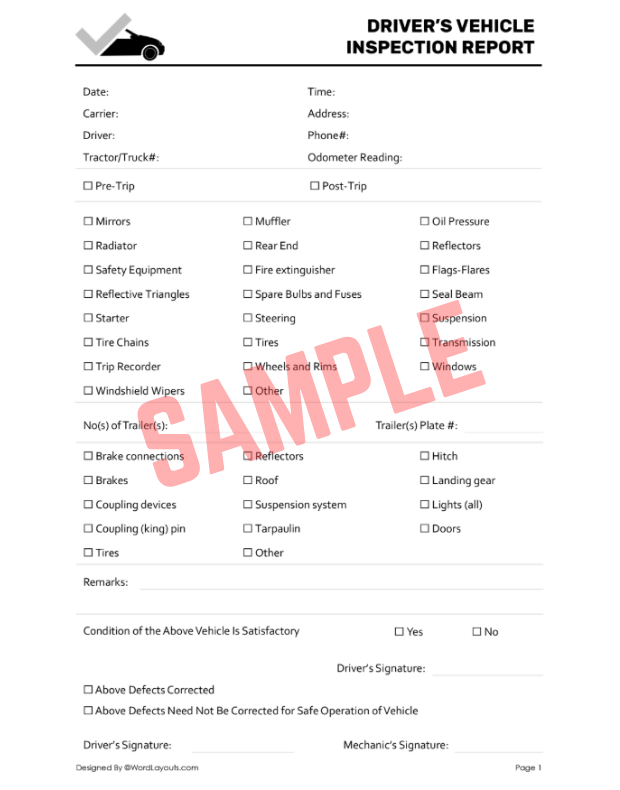
Creating a practical driver vehicle inspection report template can seem daunting, but it largely involves organizing key information into a clear and scannable format. Below is an illustrative example of what a comprehensive template might look like. This structure ensures all critical areas are covered.
This sample focuses on clarity and ease of use, making it straightforward for drivers to complete and for maintenance personnel to review. It is designed to be adaptable for various commercial vehicles, from trucks to buses. Remember, a template is a living document and can be refined over time.
DRIVER VEHICLE INSPECTION REPORT

Company Name: _________________________    Date: __________ Time: _________

Vehicle Information:
Unit Number: _________ License Plate: _________ Odometer: __________ Vehicle Type: __________

Driver Information:
Driver Name: _________________________ Driver Signature: _________________________

---

INSPECTION CHECKLIST (Mark 'OK' if satisfactory, 'X' if defect present)
For any 'X' marked, provide a detailed description of the defect below.

Section 1: Engine Compartment & Fluids
[ ] OK [ ] X  Oil Level
[ ] OK [ ] X  Coolant Level
[ ] OK [ ] X  Power Steering Fluid
[ ] OK [ ] X  Windshield Washer Fluid
[ ] OK [ ] X  Belts & Hoses (condition)
[ ] OK [ ] X  No Visible Leaks

Section 2: Exterior & Lighting
[ ] OK [ ] X  Headlights (High/Low)
[ ] OK [ ] X  Taillights & Brake Lights
[ ] OK [ ] X  Turn Signals & Hazard Lights
[ ] OK [ ] X  Mirrors (clean & secure)
[ ] OK [ ] X  Windshield & Wipers
[ ] OK [ ] X  Body & Frame (damage)
[ ] OK [ ] X  Reflectors & Markers

Section 3: Wheels & Tires
[ ] OK [ ] X  Front Left Tire (pressure, tread, damage)
[ ] OK [ ] X  Front Right Tire (pressure, tread, damage)
[ ] OK [ ] X  Rear Left Outer Tire (pressure, tread, damage)
[ ] OK [ ] X  Rear Left Inner Tire (pressure, tread, damage)
[ ] OK [ ] X  Rear Right Outer Tire (pressure, tread, damage)
[ ] OK [ ] X  Rear Right Inner Tire (pressure, tread, damage)
[ ] OK [ ] X  Spare Tire (condition & pressure)
[ ] OK [ ] X  Lug Nuts (secure)

Section 4: Brakes
[ ] OK [ ] X  Air Compressor/Air Tank (if applicable)
[ ] OK [ ] X  Brake Pedal Feel
[ ] OK [ ] X  Parking Brake
[ ] OK [ ] X  Slack Adjusters (if applicable)
[ ] OK [ ] X  Brake Drums/Discs

Section 5: Interior & Emergency Equipment
[ ] OK [ ] X  Steering Wheel & Column
[ ] OK [ ] X  Seatbelts
[ ] OK [ ] X  Horn
[ ] OK [ ] X  Gauges & Warning Lights
[ ] OK [ ] X  Heater & Defroster
[ ] OK [ ] X  First-Aid Kit
[ ] OK [ ] X  Fire Extinguisher
[ ] OK [ ] X  Warning Triangles/Flares

Section 6: Coupling Devices & Cargo (if applicable)
[ ] OK [ ] X  Fifth Wheel/Pintle Hook
[ ] OK [ ] X  Kingpin & Locking Mechanism
[ ] OK [ ] X  Safety Chains/Cables
[ ] OK [ ] X  Electrical & Air Lines
[ ] OK [ ] X  Cargo Securement (straps, chains, etc.)

---

DEFECTS NOTED:
(Provide detailed description of all items marked 'X' above)
1. ____________________________________________________________________
2. ____________________________________________________________________
3. ____________________________________________________________________
4. ____________________________________________________________________

---

MECHANIC'S REPORT (To be completed if defects were noted)

Defects Repaired: [ ] Yes [ ] No
If Yes, describe repairs: ____________________________________________________________________
____________________________________________________________________
Repair Date: _______________ Mechanic's Name: _________________________
Mechanic's Signature: _________________________

Vehicle Returned to Service: [ ] Yes [ ] No (If No, explain why: _______________)
Management Signature: _________________________ Date: _______________
This sample layout for a driver vehicle inspection report template can be printed or adapted for digital use. It provides a clear, itemized structure that guides drivers through a thorough inspection. The dedicated space for defect description is crucial for clear communication between drivers and maintenance staff.
By utilizing a consistent template like this, companies can ensure that every inspection is comprehensive and that all necessary information is captured. This systematic approach is vital for maintaining vehicle safety, ensuring regulatory compliance, and optimizing fleet operations. Regularly reviewing and updating your template based on operational needs and new regulations is also a best practice.
A well-designed driver vehicle inspection report template is an indispensable asset for any commercial fleet, serving as a cornerstone for both safety and operational excellence. It transforms what could be a complex, error-prone process into a structured and reliable routine. By consistently implementing thorough pre-trip and post-trip inspections, businesses not only comply with essential regulations but also foster a strong culture of safety amongst their drivers and maintenance teams.
The proactive identification and resolution of vehicle defects safeguard against preventable accidents, reduce costly downtime, and ultimately contribute to the longevity and efficiency of your fleet. Embracing a standardized, easy-to-use inspection template empowers your team to maintain high safety standards and operational readiness. Make sure your chosen template is regularly reviewed and updated to reflect any changes in vehicle types or regulatory requirements, ensuring its continued effectiveness.