In today’s competitive business landscape, effective client engagement is paramount. Every interaction with a customer, especially an on-site visit, presents a critical opportunity to strengthen relationships, understand needs, and identify potential challenges or new avenues for growth. However, without proper documentation, the valuable insights gained during these visits can quickly be lost or misinterpreted, leading to missed opportunities and inefficient follow-ups. This is precisely where a robust customer site visit report template becomes an invaluable asset for any organization.
A well-structured template transforms informal notes into actionable intelligence, ensuring that every detail, observation, and commitment is systematically recorded and easily retrievable. It standardizes the reporting process across teams, fostering consistency and professionalism in all client-facing operations. This article will explore the profound benefits of implementing such a template, delve into its essential components, and provide a practical sample to guide your own reporting efforts.
The Undeniable Value of Standardized Client Visit Reporting
Standardizing how your team reports on customer interactions can profoundly impact various aspects of your business. From enhancing client relationships to streamlining internal processes, a consistent approach to visit documentation yields significant dividends. This practice ensures that no critical information slips through the cracks, leading to better decision-making and improved customer satisfaction.
Enhancing Customer Relationship Management
Consistent reporting fosters stronger, more personalized customer relationships. When every team member utilizes the same customer site visit report template, a comprehensive and unified record of all interactions is built over time. This historical data is crucial for understanding client evolution and tailoring future engagements.
Detailed visit reports allow your sales, support, and technical teams to have a complete view of a customer’s history, preferences, and pain points. This shared understanding facilitates more informed conversations and proactive problem-solving. Studies show that companies with strong CRM practices can see sales increases of up to 29% due to improved customer insight.
Streamlining Operational Efficiency
Efficiency gains are a natural outcome of standardized reporting. A clear, consistent format for a client visit report minimizes the time employees spend on administrative tasks, allowing them to focus more on core responsibilities. It provides a quick reference for post-visit actions.
Furthermore, a uniform customer interaction report makes data aggregation and analysis significantly easier for management. Identifying trends, common issues, or successful strategies across multiple customer visits becomes straightforward. This leads to more informed strategic decisions and better allocation of resources, cutting down on redundant efforts.
Mitigating Risks and Ensuring Compliance
Thorough documentation acts as a vital safeguard for your business. A detailed site assessment form serves as a reliable record of agreements, discussions, and decisions made during a visit. This can be critical in resolving disputes or clarifying misunderstandings should they arise.
Beyond dispute resolution, these reports are essential for demonstrating compliance with industry regulations or internal safety protocols. For sectors requiring strict adherence to guidelines, a comprehensive field visit report can provide evidence of due diligence and adherence to standards. It helps track and manage risks proactively by highlighting potential issues before they escalate.
Essential Elements of an Effective Customer Site Visit Report Template
Crafting a useful client visit report requires more than just jotting down notes. It demands a structured approach that captures all relevant information, from initial observations to actionable follow-up steps. An effective customer site visit report template is designed to guide the reporter through these critical phases, ensuring no vital detail is overlooked.
Pre-Visit Planning and Contextual Information
The foundation of any successful site visit report is the context surrounding the visit itself. This section should provide all necessary background details, allowing anyone reviewing the report to quickly grasp the purpose and scope of the engagement. It sets the stage for the observations that follow.
Key information includes the customer’s name, contact details, the date and time of the visit, and the names of all attendees from both your organization and the client’s side. Crucially, it should also outline the primary objective of the visit—whether it’s a sales pitch, technical support, project review, or a routine check-in. Documenting the agenda helps frame the subsequent discussion.
On-Site Observations and Key Findings
This is the core of your visit report, where the actual insights and observations from the site visit are meticulously documented. This section moves beyond simple descriptions to capture actionable intelligence and critical data points. Clear and concise language is essential here to convey information accurately.
Bullet points or numbered lists can be highly effective for organizing specific observations, issues discussed, solutions proposed, or opportunities identified. Include details such as product performance, infrastructure conditions, operational challenges, or specific requests made by the customer. Any technical specifications, photos taken, or measurements recorded should also be referenced or attached.
Post-Visit Actions and Recommendations
The value of a site visit report culminates in its ability to drive future actions. This section translates observations into a concrete plan, ensuring that the visit results in tangible progress and measurable outcomes. It outlines the commitments made and the next steps required.
Clearly list all agreed-upon follow-up actions, assigning responsibility to specific team members and setting realistic deadlines. This could include sending proposals, scheduling further meetings, addressing technical issues, or providing additional information. Recommendations for future engagement or internal improvements should also be noted here, turning insights into strategic initiatives.
Sample Customer Site Visit Report Template: A Practical Example
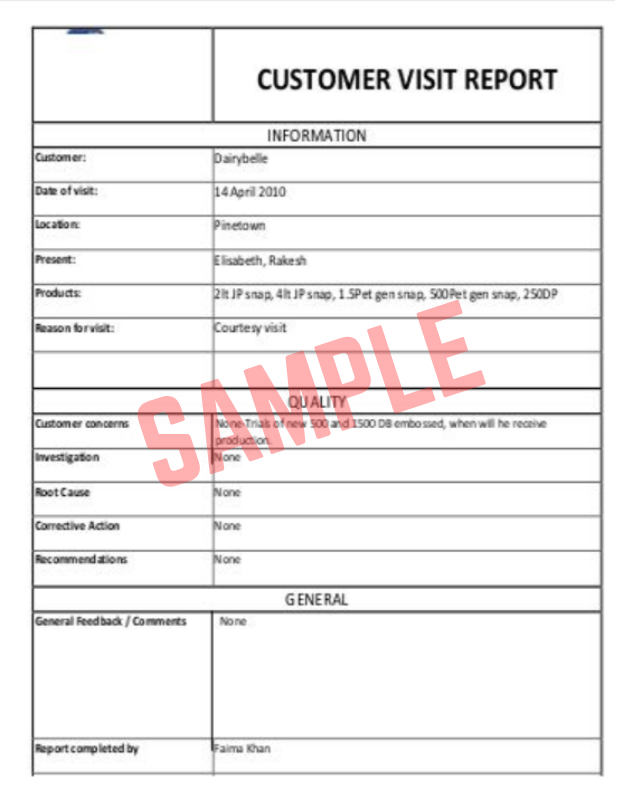
To illustrate the structure and content discussed, here is a practical example of a customer site visit report template. This sample is designed to be comprehensive yet adaptable, providing a framework that can be tailored to various industries and visit purposes. Using a standardized format like this ensures consistency and completeness across all your client interactions.
The following structure helps organize information logically, making it easy for both the report author and subsequent readers to understand the context, findings, and required follow-up. Implementing such a template significantly enhances your team’s ability to document and act upon valuable customer insights effectively.
| Customer Site Visit Report | |
|---|---|
| Report ID: | [Auto-generated / Manual ID] |
| Date of Visit: | [DD/MM/YYYY] |
| Time of Visit: | [HH:MM AM/PM] |
| Report Prepared By: | [Your Name/Team Member Name] |
| Date of Report: | [DD/MM/YYYY] |
| I. Customer Information | |
| Company Name: | [Customer Company Name] |
| Customer Contact(s): | [Name(s) & Title(s) of Customer Attendees] |
| Customer Address: | [Street, City, Postcode] |
| Customer Phone/Email: | [Phone Number / Email Address] |
| Internal Attendees: | [Name(s) & Title(s) of Your Company Attendees] |
| II. Visit Details | |
| Purpose of Visit: |
|
| Discussion Topics: |
|
| Key Observations & Findings: |
|
| Decisions/Agreements Made: |
|
| III. Action Items & Follow-up | |
| Action Items: |
|
| Next Steps: | [e.g., Schedule follow-up call on XX/YY, Send detailed proposal by ZZ/WW] |
| Recommendations: | [e.g., Recommend upgrade to product X, Suggest further training for client staff] |
| IV. Attachments (if any) | |
| List of Attachments: | [e.g., Photos, Diagrams, Meeting Minutes, Signed documents, Product Brochures] |
The strategic implementation of a dedicated customer site visit report template is more than just a procedural formality; it is a powerful tool for driving business growth and maintaining strong customer relationships. By standardizing your reporting, you empower your teams with consistent, comprehensive data, leading to more informed decisions, improved operational efficiency, and ultimately, higher customer satisfaction. This systematic approach ensures that every client interaction is leveraged to its fullest potential, building a robust foundation for future success.
Embracing such a template transforms raw observations into actionable intelligence, making your customer engagements more productive and impactful. Start integrating a clear and comprehensive client visit report into your workflow today to unlock the full value of every on-site interaction and elevate your customer management strategy.