In today’s competitive business landscape, customer satisfaction is paramount. Every interaction, good or bad, shapes how clients perceive your brand and impacts their loyalty. However, even with the best intentions, service incidents are inevitable.
When issues arise, how you respond can make all the difference. This is where a robust customer service incident report template becomes an indispensable tool. It provides a structured way to document, track, and resolve service failures, ensuring nothing falls through the cracks.
This comprehensive guide will explore the critical role of an effective incident reporting system. We will delve into the essential components of a superior customer service incident report template, how to implement it, and offer a practical sample to help your team enhance their service recovery efforts and improve overall customer experience.
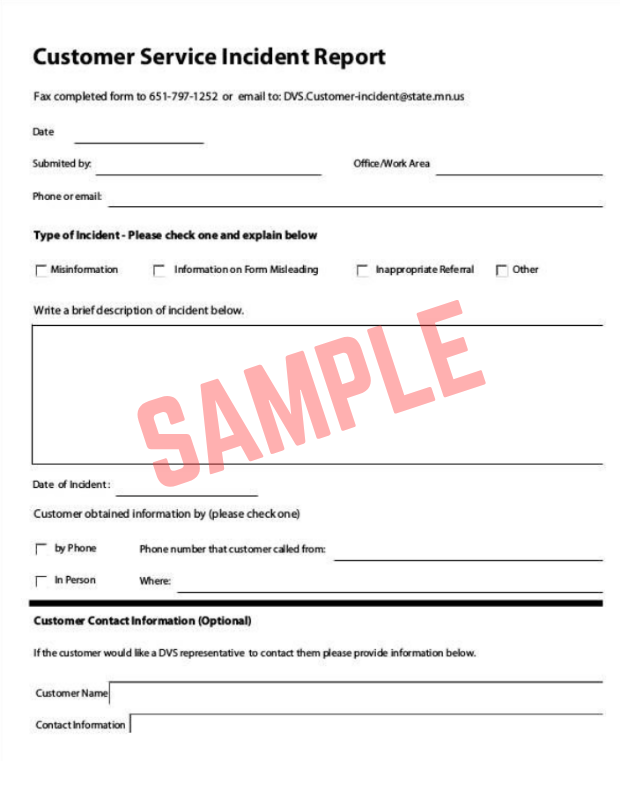
Why a Customer Service Incident Report Template is Essential for Business Success
Customer service incidents, from minor complaints to major service disruptions, can significantly impact your business. Without a standardized process for documentation, these valuable learning opportunities often go unnoticed or are poorly addressed. A dedicated customer service incident report template ensures consistency and thoroughness in every report.
Implementing a uniform reporting system is not just about recording problems; it’s about building a foundation for continuous improvement. It transforms negative experiences into actionable insights, helping businesses proactively identify recurring issues and prevent future occurrences. This systematic approach contributes directly to enhanced service quality and stronger customer relationships.
Streamlining Incident Documentation
A well-designed customer service incident report template provides a clear framework for capturing all relevant details about a service failure. This standardization ensures that every agent collects the same vital information, regardless of the incident type or the individual handling it.
Streamlined documentation leads to more accurate records, reducing the chance of miscommunication or overlooked steps. Agents can quickly fill in predefined fields, saving time and allowing them to focus on resolving the customer’s issue rather than figuring out what information to record. Consistent data entry also makes it easier to analyze trends later.
Improving Service Recovery and Customer Satisfaction
When an incident is properly documented using a customer service incident report template, it lays the groundwork for effective service recovery. With all the facts at hand, support teams can quickly understand the situation, identify root causes, and implement appropriate solutions.
Prompt and informed resolution of issues directly impacts customer satisfaction. Studies show that customers who have their problems resolved quickly and efficiently are more likely to remain loyal. A structured reporting process helps accelerate this resolution, turning a potentially negative experience into an opportunity to demonstrate excellent customer care.
Facilitating Data-Driven Decision Making
The cumulative data from multiple incident reports offers invaluable insights for business intelligence. Analyzing these reports allows management to identify common pain points, assess agent performance, and pinpoint areas requiring operational improvements.
For example, if a particular product feature consistently generates incident reports, it signals a need for product development or improved user guides. This data-driven approach moves businesses beyond anecdotal evidence, enabling them to make informed strategic decisions that enhance overall service delivery and customer experience.
Key Elements of an Effective Customer Service Incident Report
An effective customer service incident report template is more than just a form; it’s a comprehensive tool designed to capture all facets of a service interaction gone awry. Each section serves a specific purpose, contributing to a complete picture of the event.
Having a clear structure ensures that no critical information is missed, allowing for thorough investigation and resolution. Let’s explore the fundamental components that make an incident report truly useful for your customer service team.
Incident Details and Classification
The initial section of any robust customer service incident report template should focus on the specifics of the incident itself. This includes the date and time the incident occurred, when it was reported, and the agent who first handled it. A unique incident ID helps with tracking.
Crucially, this section also requires classifying the incident type (e.g., technical issue, billing error, product defect, delivery problem) and its severity level (e.g., minor, moderate, critical). This classification helps prioritize urgent issues and facilitates later analysis of common problem categories.
Customer Information and Impact
Understanding who was affected is just as important as knowing what happened. This part of the customer service incident report template should capture essential customer details, such as their name, contact information, and account ID if applicable. This ensures easy follow-up.
Furthermore, it’s vital to document the perceived impact of the incident on the customer. Did it cause financial loss, significant inconvenience, or emotional distress? Recording the customer’s sentiment helps gauge the severity from their perspective and informs the appropriate service recovery actions.
Resolution Steps and Follow-Up
The heart of the incident report lies in detailing the steps taken towards resolution. This includes a chronological account of actions performed by the agent, any internal escalations, and the proposed or actual solution implemented. Transparency here is key.
Finally, a good customer service incident report template will include fields for follow-up actions and their deadlines, such as contacting the customer after a few days to ensure satisfaction. It also specifies who is responsible for each follow-up, ensuring accountability and a complete feedback loop.
Sample Customer Service Incident Report Template
Creating a structured customer service incident report template can significantly improve your team’s efficiency and effectiveness in handling customer issues. Below is a comprehensive sample template that you can adapt for your organization. This format ensures all necessary details are captured consistently.
Utilizing this kind of template helps standardize your incident management process, provides clear guidelines for your agents, and creates valuable data for future analysis. It’s designed to be intuitive and covers the full lifecycle of a customer service event, from initial report to final resolution and follow-up.
-
Incident Details
- Incident ID: [Auto-generated unique ID]
- Date of Incident: [DD/MM/YYYY]
- Time of Incident: [HH:MM AM/PM]
- Date Reported: [DD/MM/YYYY]
- Time Reported: [HH:MM AM/PM]
- Reporting Agent: [Agent’s Name/ID]
- Incident Type:
- Technical Issue
- Billing/Payment Error
- Product/Service Defect
- Delivery/Shipping Problem
- Account Access Issue
- General Inquiry/Complaint
- Other (Specify): [Text Field]
- Severity Level:
- Low (Minor inconvenience)
- Medium (Significant inconvenience, potential loss)
- High (Critical impact, reputational risk, major financial loss)
- Incident Summary: [Brief, objective description of the incident]
-
Customer Information
- Customer Name: [First Name Last Name]
- Customer Email: [[email protected]]
- Customer Phone: [Phone Number]
- Customer Account ID/Number: [If applicable]
- Contact Preference: [Email/Phone/Other]
- Customer’s Perceived Impact: [Describe how the customer felt about the incident and its consequences]
-
Actions Taken & Resolution
- Chronology of Actions:
- [Date/Time] – [Action taken, e.g., “Agent contacted customer,” “Troubleshooting steps performed,” “Escalated to Level 2 support”]
- [Date/Time] – [Further actions]
- Internal Escalation (If applicable):
- Escalated To: [Name/Department]
- Date/Time of Escalation: [DD/MM/YYYY HH:MM]
- Reason for Escalation: [Text Field]
- Proposed/Actual Resolution: [Detailed explanation of how the incident was resolved]
- Resolution Status:
- Resolved
- Pending
- Escalated
- Closed (Unresolved)
- Date of Resolution: [DD/MM/YYYY]
- Time of Resolution: [HH:MM AM/PM]
- Chronology of Actions:
-
Follow-Up & Analysis
- Required Follow-Up Actions:
- [e.g., “Send follow-up email in 3 days,” “Monitor account for 7 days”]
- Follow-Up Due Date: [DD/MM/YYYY]
- Responsible for Follow-Up: [Name/Department]
- Root Cause Analysis (If identified): [Why did this incident occur?]
- Lessons Learned/Preventative Measures: [Suggestions to prevent similar incidents in the future]
- Required Follow-Up Actions:
Implementing Your Customer Service Incident Reporting System
Simply having a well-designed customer service incident report template is only half the battle. The true value comes from effectively integrating it into your daily operations. This requires a strategic approach that includes comprehensive training, leveraging technology, and a commitment to continuous improvement.
Successful implementation ensures that your team not only uses the template but also understands its purpose and contributes meaningfully to the overall incident management process. It transforms a document into a dynamic tool for enhancing customer experience and operational efficiency.
Training Your Team for Accurate Reporting
Even the most intuitive customer service incident report template requires proper training to be utilized effectively. Agents need to understand why accurate and detailed reporting is crucial, not just a bureaucratic task. Training should cover how to fill out each section comprehensively and consistently.
Provide clear examples of good and poor reports, emphasizing the importance of objective language and factual details. Role-playing scenarios can also help agents practice documenting different types of incidents, building their confidence and proficiency in using the new system.
Leveraging Technology for Efficient Incident Management
While a physical customer service incident report template is a good start, modern businesses benefit immensely from digital solutions. Integrating your incident reporting into a customer relationship management (CRM) system or a dedicated help desk platform can automate many aspects of the process.
Digital tools allow for easier data entry, automated routing of incidents to the correct departments, and real-time tracking of resolution progress. They also facilitate robust analytics, making it simple to generate reports, identify trends, and measure key performance indicators related to service recovery and customer satisfaction.
Continuous Improvement Through Analysis
The ultimate goal of using a customer service incident report template is to learn and grow. Regularly scheduled reviews of compiled incident data are essential. Analyze patterns, identify recurring issues, and evaluate the effectiveness of your resolution strategies.
Use these insights to refine your products, services, and internal processes. Encourage feedback from your support team on the template itself – are there fields missing? Are some confusing? This iterative approach to incident management ensures that your system evolves to meet changing business needs and consistently improves the customer journey.
Mastering customer service incident reporting is a vital step towards operational excellence and enhanced customer loyalty. By consistently using a comprehensive customer service incident report template, businesses can transform every service failure into a valuable learning experience. This disciplined approach not only helps in resolving immediate issues efficiently but also provides crucial data for strategic decision-making and long-term service improvement.
Invest in developing and implementing a robust incident reporting system today. Empower your team with the right tools, foster a culture of accountability, and proactively work towards creating exceptional customer experiences that set your brand apart. Start leveraging the power of structured incident reporting to build stronger customer relationships and drive sustainable business growth.