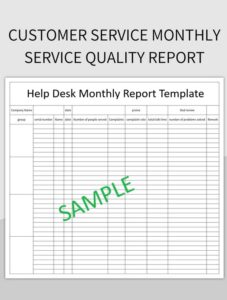
Managing a help desk in today’s fast-paced digital environment presents unique challenges. From a constant stream of new tickets to managing agent performance and ensuring customer satisfaction, the sheer volume of information can be overwhelming. Without a clear system to track daily activities, critical insights can easily get lost, hindering operational efficiency and strategic decision-making. This is where a well-structured help desk daily report template becomes an invaluable asset for any support team.
A daily report provides a snapshot of your help desk’s performance, offering crucial data points that reflect the day’s successes and areas for improvement. It transforms raw data into actionable intelligence, enabling managers to swiftly identify trends, allocate resources effectively, and proactively address potential bottlenecks. This article will explore the critical elements of an effective daily report, discuss its benefits, and provide a comprehensive sample help desk daily report template to guide your efforts.
You’ll discover why a standardized daily report is essential, what key metrics to include, and how to leverage this information to drive operational excellence. Whether you’re a seasoned IT manager or a budding support lead, understanding the power of daily reporting can significantly elevate your team’s productivity and overall service quality. Let’s delve into creating a reporting framework that truly supports your goals.
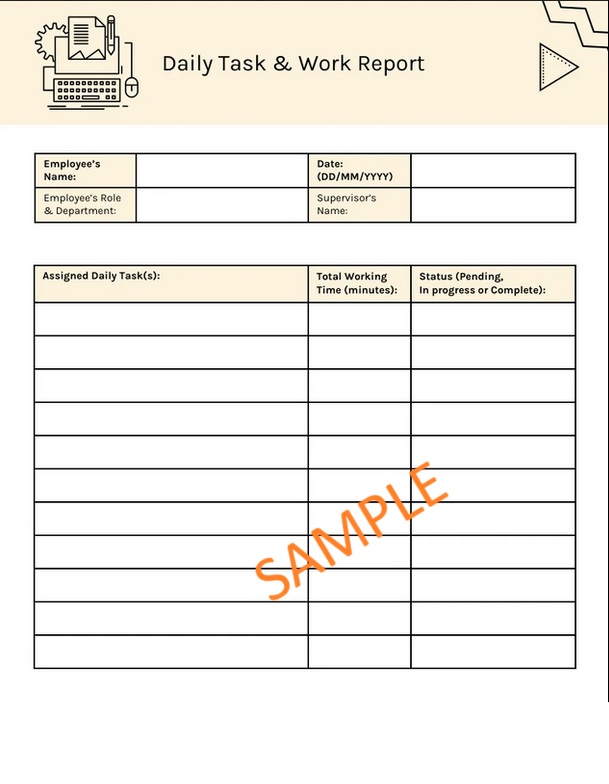
Why a Daily Help Desk Report Template is Essential for IT Support
Implementing a standardized daily report for your help desk operations is not just about tracking numbers; it’s about fostering an environment of accountability, transparency, and continuous improvement. This structured approach helps transform reactive support into a proactive service delivery model, ultimately enhancing user experience. It serves as a vital communication tool, keeping all stakeholders informed about daily performance.
Without a consistent reporting mechanism, it’s easy for small issues to escalate or for patterns of inefficiency to go unnoticed. A daily report template ensures that specific, relevant data is collected and presented in an easily digestible format every single day. This consistency allows for accurate historical comparison and trend analysis over time.
Gaining Real-time Operational Visibility
A daily help desk report provides immediate insight into the operational heartbeat of your support team. It allows managers to see precisely what happened during the previous 24 hours, from ticket volumes to resolution rates. This real-time visibility is crucial for making agile decisions and responding quickly to emerging issues.
You can identify spikes in specific ticket types, understand workload distribution among agents, and assess the immediate impact of recent changes. For instance, if a new software update caused an influx of specific issues, the daily report will highlight this immediately. This rapid feedback loop allows for timely intervention and problem mitigation.
Boosting Team Accountability and Performance
When agents know their daily activities contribute to a collective report, it naturally fosters a sense of accountability. A daily report template can highlight individual and team performance against key metrics, encouraging a higher standard of work. It provides objective data for performance reviews and coaching opportunities.
Managers can use the report to celebrate achievements, such as high first-contact resolution rates, and address areas needing improvement, like unusually long resolution times. This data-driven approach removes subjectivity from performance discussions, leading to more constructive feedback. Ultimately, it helps cultivate a culture focused on excellence.
Identifying and Addressing Recurring Issues
One of the most powerful aspects of daily reporting is its ability to uncover recurring problems and systemic weaknesses. By consistently tracking incident types and categories, patterns quickly emerge that might otherwise remain hidden within individual ticket data. This allows your team to move beyond just fixing symptoms.
For example, if the daily reports consistently show a high volume of password reset requests or network connectivity issues, it signals a deeper underlying problem that needs strategic attention. Addressing these root causes through process improvements or user education can significantly reduce future ticket volumes and improve overall system stability. This proactive problem-solving saves time and resources in the long run.
Key Components of an Effective Help Desk Daily Report
Crafting a help desk daily report template that truly adds value requires careful consideration of its content and structure. It’s not just about listing numbers; it’s about presenting relevant data in a way that facilitates understanding and action. The goal is to create a report that is comprehensive enough to inform, yet concise enough to be reviewed quickly.
A well-designed template ensures consistency, making it easier to compare data day-over-day and identify trends without sifting through disparate information. It standardizes the data points collected, which is critical for accurate analysis and strategic planning. The focus should always be on metrics that directly relate to service quality, efficiency, and customer satisfaction.
Essential Metrics to Include
To provide a comprehensive overview, your daily help desk report should feature a selection of critical metrics. These indicators offer a clear picture of daily performance and highlight areas requiring attention. It’s important to select metrics that align with your overall service level agreements (SLAs) and business objectives.
Consider including metrics such as:
- Total Tickets Received: The number of new issues logged within the reporting period.
- Total Tickets Resolved: The count of issues successfully closed.
- Average Resolution Time: The mean time taken to resolve tickets, indicating efficiency.
- First Contact Resolution Rate: Percentage of issues resolved during the initial interaction, a key indicator of agent proficiency.
- Open Tickets by Status/Priority: A breakdown of active tickets, categorized by their urgency and current stage.
- Top 3-5 Ticket Categories: Identifying the most frequent types of issues reported.
- SLA Compliance Rate: The percentage of tickets resolved within defined service level agreements.
- Agent Performance Snapshot: Basic metrics per agent like tickets resolved or average handling time, where relevant.
Structuring Your Report for Clarity
The layout and structure of your help desk daily report template are just as important as the data itself. A well-organized report is easy to read, understand, and act upon. Avoid clutter and prioritize key information, using headings and bullet points to break down complex data.
Start with a summary section that highlights the most critical numbers, offering a quick overview for busy managers. Follow this with more detailed breakdowns of ticket activity, agent performance, and any notable incidents. Visual aids like simple charts or graphs can also enhance comprehension, though for a daily report, concise numerical summaries are often sufficient. Ensure each section is clearly labeled and logically flows into the next.
Tools and Automation for Reporting
Manual compilation of daily reports can be time-consuming and prone to error, especially for busy help desks. Leveraging specialized tools and automation can significantly streamline the reporting process. Most modern help desk software and IT service management (ITSM) platforms come with built-in reporting capabilities.
These tools can automatically pull data, generate reports, and even schedule their delivery to relevant stakeholders. Integrating your help desk system with business intelligence (BI) tools can further enhance reporting, allowing for more dynamic dashboards and deeper analytical insights. Automating your help desk daily report template frees up agents and managers to focus on core tasks, improving overall productivity.
Leveraging Your Help Desk Daily Report for Operational Excellence
A daily report is more than just a summary of activities; it’s a powerful tool for driving continuous improvement and achieving operational excellence within your support organization. By consistently analyzing the data presented in your help desk daily report template, you can uncover opportunities to refine processes, enhance agent skills, and ultimately deliver superior customer service. This proactive approach ensures that your help desk evolves in response to real-world demands and data-driven insights.
The true value of these reports lies in their interpretation and the subsequent actions taken. They provide a continuous feedback loop, allowing managers to fine-tune operations on an ongoing basis. This iterative process of reporting, analyzing, and acting is fundamental to maintaining a high-performing support function.
Informing Strategic Decisions
The aggregated data from your daily reports forms a rich foundation for strategic planning. By observing trends over time, you can identify recurring issues that might require a larger project or a new tool to address. For instance, a persistent increase in tickets related to a specific application could signal a need for user training or a system upgrade.
These insights extend beyond immediate problem-solving, helping inform budget allocations, staffing decisions, and long-term technology investments. Knowing where your help desk’s pain points truly lie, based on objective data, ensures that resources are directed towards initiatives that will yield the greatest impact. This helps in making informed decisions about the future direction of your support services.
Improving Customer Satisfaction
Ultimately, the goal of any help desk is to provide excellent service and ensure customer satisfaction. Daily reports offer direct insights into the factors that influence this crucial outcome. By tracking metrics like first contact resolution rate and average resolution time, you can pinpoint areas where customer experience might be falling short.
Faster resolution times and a higher percentage of issues resolved on the first interaction directly correlate with happier customers. The report can also highlight categories of issues causing significant customer frustration, prompting targeted efforts to improve the relevant services or processes. Using daily data to enhance efficiency and effectiveness directly contributes to a more positive customer journey.
Optimizing Resource Allocation
One of the most immediate benefits of a daily help desk report template is its utility in optimizing resource allocation. By understanding daily ticket volumes, peak hours, and agent workload distribution, managers can make informed decisions about staffing levels and task assignments. This ensures that the right number of agents with the appropriate skills are available when and where they are most needed.
For example, if the report consistently shows a surge in requests during specific hours, you might adjust shift schedules or assign specialized agents to handle those periods. This prevents agent burnout, reduces queue times, and maintains service quality even during high-demand periods. Efficient resource allocation is key to operational sustainability and cost-effectiveness.
Sample Help Desk Daily Report Template
Here is a practical example of a help desk daily report template that your team can adapt and implement. This structure provides a comprehensive yet concise overview of daily operations, ensuring all critical information is captured and presented clearly. Remember to customize the specific fields and metrics to best suit your organization’s unique needs and priorities.
Date: [YYYY-MM-DD]
Reporting Period: [Start Time] – [End Time]
Report Compiled By: [Agent Name/Department]
Summary Overview
- Total New Tickets Received: [Number]
- Total Tickets Resolved: [Number]
- Total Tickets Reopened: [Number]
- Current Open Tickets: [Number]
- SLA Compliance Rate (Resolved Today): [Percentage]%
Ticket Activity Details
| Metric | Value Today | Notes/Comments |
|---|---|---|
| New Tickets (High Priority) | [Number] | [e.g., Critical system down, VIP issue] |
| New Tickets (Medium Priority) | [Number] | |
| New Tickets (Low Priority) | [Number] | |
| Average Resolution Time (Today) | [HH:MM] | |
| First Contact Resolution Rate | [Percentage]% | |
| Customer Satisfaction Score (CSAT) | [Score/Percentage] | [e.g., Based on responses from yesterday’s tickets] |
Top Ticket Categories (Today)
- [Category 1]: [Number of Tickets]
- [Category 2]: [Number of Tickets]
- [Category 3]: [Number of Tickets]
- [Category 4]: [Number of Tickets]
- [Category 5]: [Number of Tickets]
Outstanding Issues / Escalations
- [Ticket ID] – [Brief Description] – [Current Status] – [Assigned To] – [Reason for Delay/Escalation]
- [Ticket ID] – [Brief Description] – [Current Status] – [Assigned To] – [Reason for Delay/Escalation]
- [Ticket ID] – [Brief Description] – [Current Status] – [Assigned To] – [Reason for Delay/Escalation]
Key Highlights & Noteworthy Events
- [e.g., Successful resolution of major outage impacting X users.]
- [e.g., Identified new software bug in application Y, workaround being developed.]
- [e.g., Agent X achieved highest first-contact resolution rate today.]
Next Steps / Follow-ups
- [e.g., Follow up on escalated ticket #1234 by [Time/Date].]
- [e.g., Investigate sudden increase in ‘Printer Offline’ tickets.]
- [e.g., Prepare training material for common issue Z based on today’s trends.]
Implementing a robust daily reporting system is a cornerstone of effective help desk management. By consistently utilizing a well-designed template, your team gains unparalleled clarity into daily operations, empowering you to make data-driven decisions that enhance service quality and efficiency. This commitment to continuous monitoring and improvement positions your help desk as a critical asset, contributing significantly to overall business success and user satisfaction.
Begin by adapting the provided help desk daily report template to your specific needs, focusing on the metrics most crucial to your organization. Regular review and refinement of your reporting process will ensure it remains relevant and effective, continually driving your support team towards operational excellence. The insights gained are invaluable for fostering a proactive, responsive, and high-performing help desk environment.