Navigating the complexities of workplace dynamics often presents unique challenges for businesses and HR professionals alike. When an employee’s conduct deviates from company policy or expected professional standards, prompt and accurate documentation becomes not just helpful, but crucial. This process ensures fairness, maintains a healthy work environment, and protects the organization legally. Understanding how to properly record such events is essential, and a robust employee behavior incident report template serves as the backbone of this critical HR function.
This article will delve into the profound importance of thoroughly documenting workplace incidents, exploring why a standardized approach is indispensable for both employees and employers. We will also break down the key elements that constitute an effective incident report, ensuring you capture all necessary details for clear and actionable insights. By the end, you will gain a comprehensive understanding of how to utilize an employee behavior incident report template to manage workplace conduct issues effectively and consistently.
The Importance of Documenting Workplace Incidents
Effective management of employee behavior incidents starts with meticulous documentation. It’s not merely about creating a paper trail; it’s about establishing a clear, objective record that serves multiple vital purposes within an organization. Properly documenting incidents fosters an environment of accountability and transparency.
A standardized process helps ensure that every incident, regardless of its severity, is handled with the same level of diligence. This consistency builds trust among employees and demonstrates a commitment to maintaining fair workplace practices. Failing to document can lead to misunderstandings, repeat offenses, and a breakdown of workplace morale.
Ensuring Fairness and Consistency
Objectivity is paramount when addressing employee behavior concerns. An employee behavior incident report template provides a structured framework that guides managers and HR personnel to record facts without bias or personal interpretation. This ensures that similar incidents are treated in a similar manner across the board, reducing the perception of favoritism or unfair disciplinary actions.
Standardized reporting helps create an audit trail that can be referenced during follow-up discussions, performance reviews, or even formal investigations. It supports managers in making informed decisions by providing a consistent record of events, fostering an equitable environment where everyone understands the expectations and consequences.
Legal Protection and Compliance
In today’s litigious environment, businesses must prioritize legal compliance. Detailed incident reports serve as critical evidence should an employee dispute a disciplinary action or file a complaint. They demonstrate that the organization followed due process and acted responsibly.
Well-documented incidents help protect the company from potential lawsuits, unemployment claims, or regulatory penalties. An employee behavior incident report template ensures that all necessary information, such as dates, times, witnesses, and actions taken, is systematically captured, aligning with legal requirements and best practices. This proactive approach significantly mitigates risk.
Fostering a Healthy Work Environment
Addressing inappropriate behavior promptly and thoroughly is crucial for maintaining a positive and productive work environment. When incidents go undocumented or are handled inconsistently, it can lead to decreased morale, increased stress, and a decline in overall team performance. Employees need to feel safe and respected.
A clear reporting process empowers employees to report concerns, knowing they will be taken seriously and acted upon. It also sends a clear message that certain behaviors are unacceptable and will be addressed. Ultimately, consistent documentation through an employee behavior incident report template contributes to a culture of accountability and mutual respect.
Key Elements of an Effective Employee Incident Report Form
To be truly effective, an incident report form must be comprehensive, clear, and easy to use. It should guide the reporter through all necessary fields, ensuring no critical detail is overlooked. A well-designed template minimizes ambiguity and maximizes the utility of the collected information.
The structure of the report should facilitate a factual recounting of events, avoiding subjective language or speculation. By focusing on objective data, the report becomes a reliable record that can withstand scrutiny. Every section serves a specific purpose, contributing to a complete picture of the incident.
Essential Information Gathering
The initial section of any good incident report should capture all fundamental details surrounding the event. This includes the date, exact time, and specific location where the incident occurred. Identifying all parties involved—the employee whose behavior is being reported, the reporter, and any witnesses—is also critical.
Additionally, recording the job titles and departments of those involved helps establish context and ensures proper follow-up communication channels are used. This foundational data creates a clear snapshot of the incident, making it easier to track and retrieve information later.
Describing the Incident Objectively
The core of any employee behavior incident report template is a detailed, objective description of the incident itself. This section should focus solely on observable facts and actions, avoiding assumptions or emotional language. The reporter should answer key questions like “who, what, when, where, and how.”
It’s helpful to include any direct quotes, if relevant, and describe the behavior observed without adding interpretation. For example, instead of “John was rude,” write “John raised his voice during the meeting and used inappropriate language towards a colleague.” This factual recounting prevents misinterpretation and provides concrete details for review.
Recommended Actions and Follow-Up
Once the incident has been described, the report should outline any immediate actions taken and recommended next steps. This could include a verbal warning, a formal meeting with HR, or a review of relevant company policies. Documenting these initial responses is crucial for demonstrating timely action.
The template should also include a section for follow-up actions, such as scheduling a meeting, commencing an investigation, or implementing corrective measures. Identifying who is responsible for these actions and setting a timeline ensures accountability. This structured approach to resolution is a hallmark of an effective employee behavior incident report template.
Sample Employee Behavior Incident Report Template
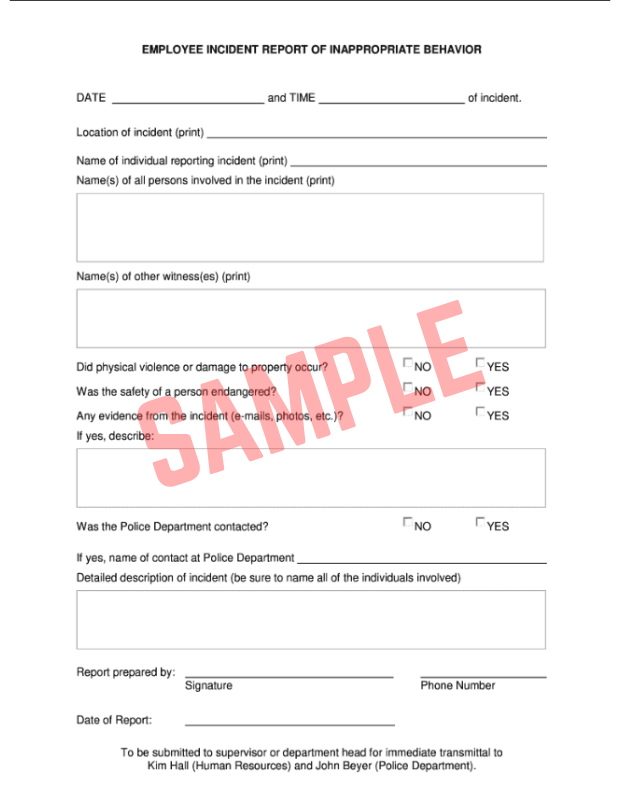
A well-structured employee behavior incident report template provides a clear framework for documenting workplace issues thoroughly and consistently. The following sample illustrates the key sections and information typically included. This format ensures that all critical details are captured, aiding in fair resolution and proper record-keeping. Using a standardized template like this streamlines the reporting process for managers and HR personnel.
EMPLOYEE BEHAVIOR INCIDENT REPORT

Date of Report: [MM/DD/YYYY]
Time of Report: [HH:MM AM/PM]
Report Prepared By: [Full Name & Title of Reporter]
Department: [Reporter's Department]
Contact Information: [Reporter's Email/Phone Number]

---

INCIDENT DETAILS

Date of Incident: [MM/DD/YYYY]
Time of Incident: [HH:MM AM/PM - HH:MM AM/PM, or "Ongoing"]
Location of Incident: [Specific Workplace Location, e.g., "Conference Room A," "Warehouse Floor," "Remote Call"]

---

EMPLOYEE(S) INVOLVED

Employee's Name: [Full Name of Employee Whose Behavior is Being Reported]
Employee ID: [If applicable]
Job Title: [Employee's Job Title]
Department: [Employee's Department]
Date of Hire: [MM/DD/YYYY]

(If multiple employees are involved, copy and paste the above section for each employee.)

---

WITNESS(ES) (If any)

Witness Name: [Full Name]
Job Title: [Witness's Job Title]
Contact Information: [Witness's Email/Phone Number]

(If multiple witnesses, copy and paste the above section for each witness.)

---

DESCRIPTION OF INCIDENT (Be factual and objective. Avoid opinions, assumptions, or speculation.)

[Provide a clear, chronological narrative of what occurred. Include specific actions, words spoken (with direct quotes if possible), and the impact of the behavior. Reference company policies if applicable.]
Example: "On [Date] at approximately [Time], during the team meeting in Conference Room 3, [Employee's Name] loudly interrupted [Colleague's Name] multiple times while they were presenting. When asked to wait their turn, [Employee's Name] responded, 'I have a right to speak now, you're wasting everyone's time.' This behavior continued for approximately 5 minutes, disrupting the meeting flow and causing visible discomfort to other attendees."

---

COMPANY POLICIES VIOLATED (If applicable)

[List specific company policies or codes of conduct that were violated by the reported behavior.]
Example:
*   Company Code of Conduct - Section 3.2: Respectful Communication
*   Workplace Harassment Policy - Section 4.1: Disruptive Behavior

---

IMMEDIATE ACTIONS TAKEN AT THE TIME OF INCIDENT (If any)

[Describe any steps taken by the reporter or others to address the incident at the moment it occurred.]
Example: "I verbally intervened and asked [Employee's Name] to refrain from interrupting and allow [Colleague's Name] to finish their presentation."

---

RECOMMENDED ACTIONS AND FOLLOW-UP

[Suggest what next steps should be taken. This might include further investigation, a formal meeting, disciplinary action, training, etc.]
Example:
*   HR to schedule a formal meeting with [Employee's Name] to discuss the incident and reinforce company expectations.
*   Review of relevant company policies with [Employee's Name].
*   Possible requirement for communication skills training.

---

ADDITIONAL COMMENTS / ATTACHMENTS

[Any other relevant information, context, or notes. List any attached evidence such as emails, screenshots, physical damage photos, etc.]
Example: "Attached is an email from [Colleague's Name] also detailing concerns about the employee's behavior during the meeting."

---

SIGNATURES

Reporter's Signature: ____________________________
Date: ____________________________

Manager/HR Reviewer's Signature: ____________________________
Date: ____________________________

Employee Acknowledgment (Optional, for receipt of report):
I acknowledge that I have received a copy of this incident report.
Employee's Signature: ____________________________
Date: ____________________________
Implementing a reliable system for documenting employee behavior incidents is not merely a formality; it is a fundamental pillar of effective human resource management. A well-designed employee behavior incident report template serves as an invaluable tool, enabling organizations to address issues proactively, ensure fairness, and uphold legal standards. By standardizing the reporting process, businesses can foster a more respectful, productive, and legally secure workplace environment for everyone.
Embrace the power of clear, consistent documentation to transform potential workplace conflicts into opportunities for growth and adherence to company values. Take the initiative to review or implement a comprehensive incident report template within your organization, ensuring that every behavior incident is handled with the professionalism and diligence it deserves.