Embarking on a high school biology project can be an incredibly rewarding experience, offering a chance to explore the living world in depth. Before diving into experiments, a well-structured plan is crucial for success. This is where a robust high school biology project proposal template becomes indispensable, guiding you through the essential steps of outlining your research. It ensures your project is well-thought-out, feasible, and scientifically sound, setting you up for a great outcome.  Throughout this guide, we will explore the critical elements of a strong project proposal, provide a comprehensive template, and offer practical tips to help you craft a winning submission that clearly communicates your scientific intentions.
Crafting an Effective Biology Project Proposal
A biology project proposal serves as your roadmap, detailing what you intend to research, why it’s important, and how you plan to execute it. It’s more than just a formality; it’s a vital step in the scientific method, ensuring clarity and direction before any real work begins.
A well-written proposal also helps secure approval from teachers or judges, demonstrating your understanding and commitment. The process of writing a proposal forces you to think critically about your research question, anticipate challenges, and plan your experimental design meticulously.
This foresight can save significant time and effort later on. By documenting your plan, you create a reference point to stay on track and make adjustments as needed. A clear proposal is the foundation for any successful scientific investigation, from a simple classroom assignment to a major science fair entry.
Key Components of a Biology Project Proposal Template
Every strong biology project proposal template includes several essential sections that systematically outline your research. Understanding each component ensures a comprehensive and coherent submission. Let’s delve into the core elements you should incorporate into your plan.
Project Title and Contact Information
Your project title should be clear, concise, and indicative of your research. It captures the essence of your investigation in just a few words. Include your name, grade, school, and teacher’s name for easy identification.
Introduction and Background Research
This section provides an overview of your chosen topic and explains why it’s interesting or important. Summarize any existing research or scientific principles that relate to your project. Demonstrate your understanding of the broader scientific context.
Research Question
Formulate a specific, measurable, achievable, relevant, and time-bound (SMART) research question. This question is the driving force of your entire project and should clearly state what you aim to find out. A good research question is the cornerstone of a successful experiment.
Hypothesis
Based on your background research, state a testable prediction about the outcome of your experiment. Your hypothesis should be an educated guess that you will either support or refute through your data. It typically follows an “If… then… because…” format.
Materials and Equipment
List all the materials, equipment, and resources you will need to conduct your experiment. Be as specific as possible, including quantities, sizes, and any specialized instruments. This helps in budgeting and logistical planning.
Methodology/Experimental Design
Detail the step-by-step procedure you will follow to test your hypothesis. Describe your independent, dependent, and controlled variables. Explain how you will collect data, ensure accuracy, and address safety concerns.
Expected Results and Data Analysis
Describe what you anticipate finding based on your hypothesis. Outline how you will organize and analyze your data, whether through charts, graphs, or statistical tests. This section shows you’ve thought about interpreting your findings.
Project Timeline
Create a realistic schedule for completing each stage of your project, from literature review to final presentation. A timeline helps you manage your time effectively and ensures you meet deadlines. Break down tasks into smaller, manageable steps.
Bibliography/References
Cite all sources of information you used for your background research, using a consistent citation style (e.g., APA, MLA). This acknowledges the work of others and adds credibility to your proposal. Proper citation is an important part of academic integrity.
Sample High School Biology Project Proposal Template
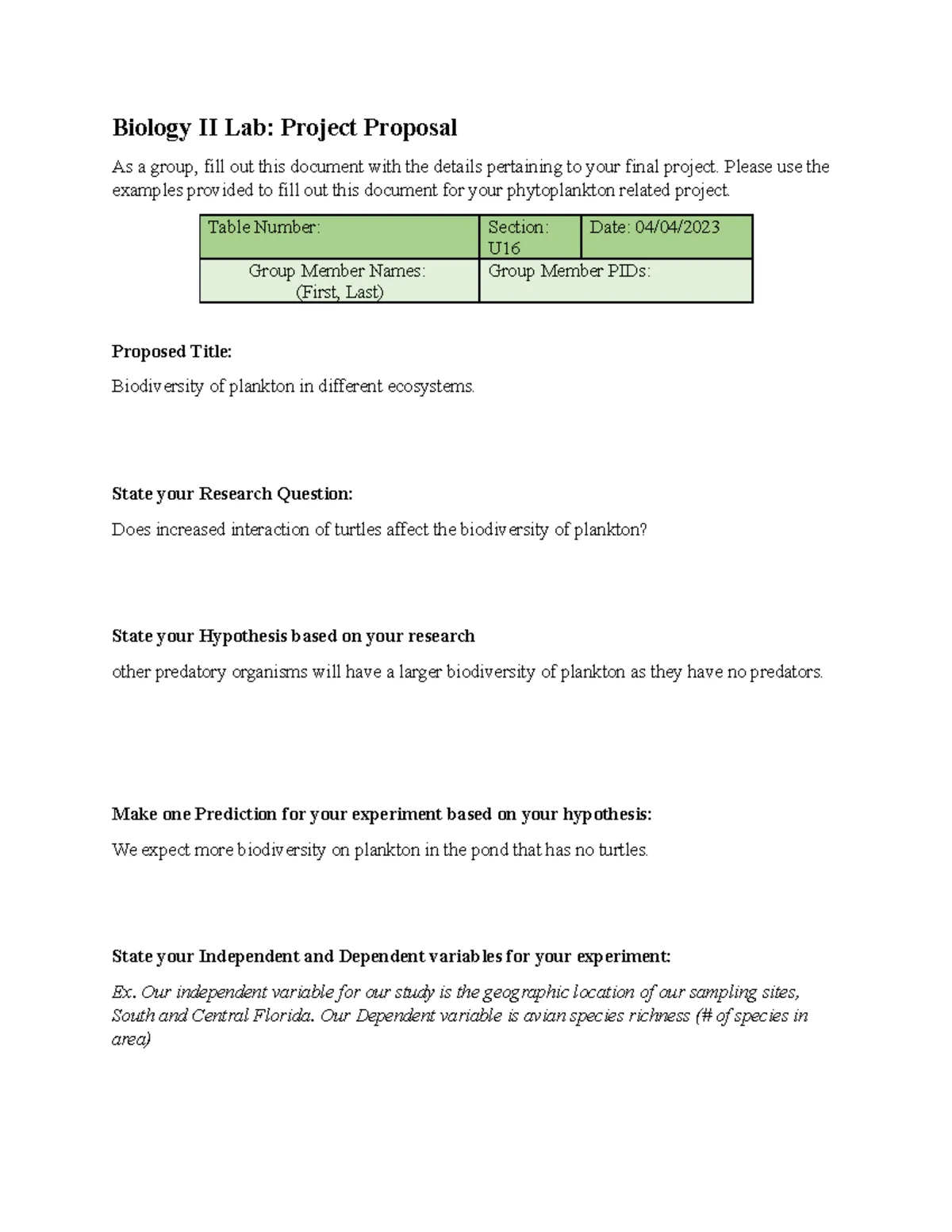
Understanding the structure is one thing, but seeing a practical application makes it much clearer. Here’s an example of how a high school biology project proposal template might be formatted, giving you a clear idea of what to include in each section. This outline provides a solid foundation for your own scientific investigation. 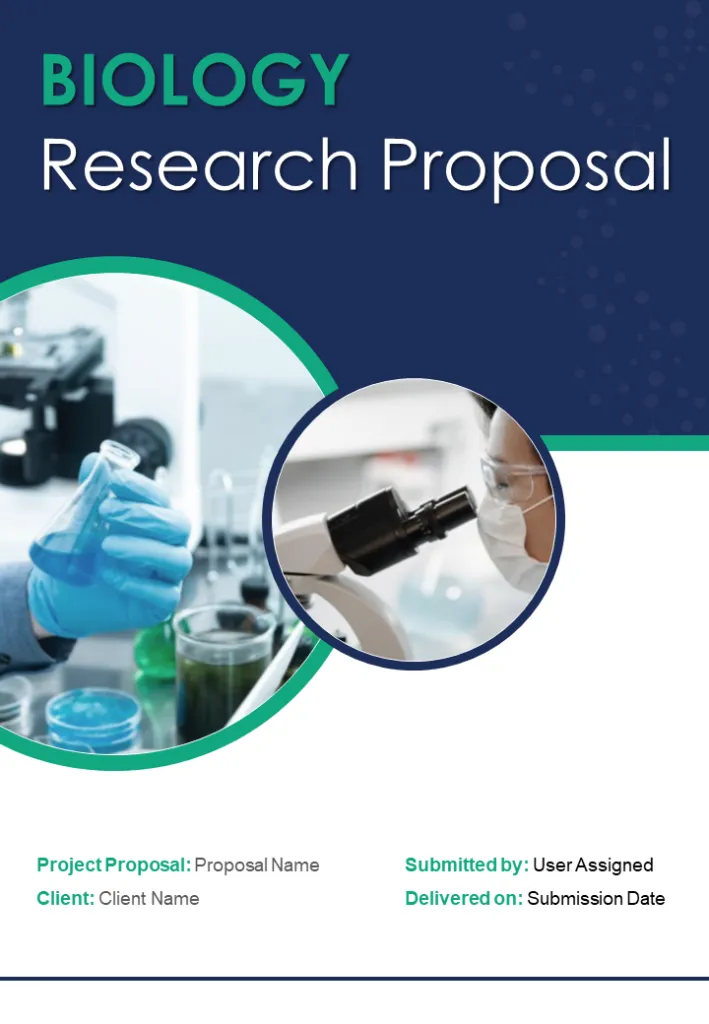
Project Title: The Effect of Light Wavelength on Photosynthesis Rate in Spinach Leaves
- Student Name: [Your Name]
- Grade Level: [Your Grade]
- School: [Your School Name]
- Teacher: [Teacher’s Name]
Introduction and Background Research
Photosynthesis is the fundamental process by which plants convert light energy into chemical energy, essential for life on Earth. Different wavelengths of light (colors) are known to be absorbed differently by plant pigments like chlorophyll. Chlorophyll primarily absorbs red and blue light, reflecting green light, which is why most plants appear green. Understanding how specific light wavelengths influence the rate of photosynthesis is crucial for optimizing plant growth in various environments, from agriculture to controlled hydroponic systems.
Research Question
How does exposure to different wavelengths of visible light (red, green, blue) affect the rate of oxygen production (a proxy for photosynthesis) in spinach leaves compared to white light and darkness?
Hypothesis
If spinach leaves are exposed to different wavelengths of visible light, then leaves under red and blue light will exhibit a higher rate of oxygen production compared to those under green light, white light, or darkness, because chlorophyll pigments absorb red and blue light most efficiently for photosynthesis.
Materials and Equipment
- Fresh spinach leaves (approx. 50 pieces, 1 cm diameter discs)
- Beakers (5 x 250 mL)
- Distilled water
- Sodium bicarbonate solution (0.5% concentration, acting as CO2 source)
- Light sources: 100W incandescent bulbs (5)
- Colored cellophane filters: Red, Green, Blue
- Timers
- Rulers
- Hole puncher
- Syringes (5 x 10 mL, without needles)
- Thermometer
- Stopwatch
Methodology/Experimental Design
- Prepare five identical setups, each consisting of a 250 mL beaker filled with 200 mL of 0.5% sodium bicarbonate solution.
- Using a hole puncher, create 10 uniform spinach leaf discs.
- To remove air from leaf discs, place 10 discs in a syringe with 5 mL of sodium bicarbonate solution. Cap the syringe, pull the plunger back to create a vacuum, and hold for 10-15 seconds until discs sink. Repeat if necessary.
- Carefully transfer 10 sunken leaf discs to each of the five beakers.
- Label each beaker: “Red Light,” “Green Light,” “Blue Light,” “White Light,” and “Darkness.”
- For the colored light setups, cover a light source with the corresponding cellophane filter and position it 15 cm above the beaker. The “White Light” beaker will have an unfiltered light source. The “Darkness” beaker will be covered completely to block all light.
- Maintain a constant temperature (e.g., 25°C) for all setups, monitoring with a thermometer.
- Record the number of floating leaf discs in each beaker every 5 minutes for 60 minutes. Floating discs indicate oxygen production.
- Repeat the entire experiment three times to ensure reliability of results.
Expected Results and Data Analysis
I expect that the spinach leaf discs exposed to red and blue light will float to the surface faster and in greater numbers than those exposed to green light, white light, or darkness. The discs in darkness are expected to remain at the bottom. Data will be recorded in a table showing the number of floating discs over time for each light condition. Graphs will be generated to visually compare the rates of photosynthesis across different light wavelengths.
Project Timeline
- Week 1: Research background information, formulate question and hypothesis, gather materials.
- Week 2: Set up experimental stations, conduct initial trials, troubleshoot.
- Week 3: Conduct Experiment (3 repetitions), collect and record data.
- Week 4: Analyze data, create graphs, draw conclusions.
- Week 5: Write final report and prepare presentation.
Bibliography/References
- Raven, P. H., Johnson, G. B., Mason, K. A., Losos, J. B., & Singer, S. R. (2017). *Biology* (11th ed.). McGraw-Hill Education.
- Taiz, L., & Zeiger, E. (2010). *Plant Physiology* (5th ed.). Sinauer Associates.
- [Any additional specific articles or websites referenced]
Tips for Writing a Winning Biology Project Proposal
Beyond just filling in the blanks of a high school biology project proposal template, there are strategies to make your proposal truly stand out. Clarity and precision are paramount in scientific writing. Ensure your language is straightforward and easy to understand, avoiding jargon where simpler terms suffice. Double-check for any grammatical errors or typos, as these can detract from the professionalism of your submission. Scientific accuracy is non-negotiable; verify all facts and figures.
Finally, consider the ethical implications of your project and any safety precautions required, detailing them clearly in your proposal. The value of a well-crafted high school biology project proposal template cannot be overstated. It transforms a vague idea into a concrete, actionable plan, guiding you through every stage of your scientific journey. By meticulously detailing your research question, methodology, and expected outcomes, you lay a strong foundation for a successful and insightful project.
Embrace the structured approach that a comprehensive template offers, allowing you to focus on the science rather than the organizational complexities. This thoughtful preparation will not only impress your instructors but also equip you with invaluable skills in scientific inquiry and project management, preparing you for future academic and professional endeavors.