The world of filmmaking is a whirlwind of creativity, technical challenges, and tight deadlines. From the bustling energy of a film set to the meticulous planning in pre-production, every detail counts. Without a clear system to track daily progress, communication can break down, leading to costly delays and missed opportunities. This is where a robust film daily production report template becomes an indispensable tool.
A well-structured daily production report, often simply called a DPR, acts as the central nervous system for your film shoot. It compiles all critical information from the day’s work, providing a snapshot of progress, problems, and resource usage. Mastering the art of using and creating an effective template can significantly streamline your production process, ensuring everyone stays on the same page.
This article will explore why these reports are vital, the essential components they should contain, and provide a comprehensive sample film daily production report template to guide your own projects. Understanding and implementing these strategies will empower your team to maintain efficiency and transparency throughout your entire production timeline.
Why a Daily Production Report is Crucial for Filmmaking Success
In the fast-paced environment of a film set, information needs to flow quickly and accurately to various departments. A daily production report template is not just a formality; it’s a strategic asset that supports effective decision-making and project management. It bridges the gap between the chaotic reality on set and the need for organized data.
These reports serve as a vital historical record, offering insights that can be invaluable for post-production, legal matters, and future projects. By documenting every aspect of a shoot day, you create an undeniable account of what transpired, minimizing disputes and improving overall accountability. This proactive approach helps prevent minor issues from escalating into major problems.
Enhancing Communication and Accountability on Set
Effective communication is the backbone of any successful film production. A daily production report acts as a centralized communication hub, delivering key updates to producers, directors, and department heads who may not always be on set. This ensures that everyone involved, from executive producers to post-production supervisors, has a clear understanding of the day’s accomplishments and challenges.
By clearly documenting completed scenes, pages shot, and any arising issues, a DPR fosters greater accountability among the crew. Each department’s contribution and any factors affecting their work are recorded. This transparency helps identify bottlenecks quickly, allowing for prompt adjustments and keeping the production on schedule.
Tracking Progress and Managing Resources Effectively
Keeping a film project on budget and on schedule is a constant challenge. A daily production report template provides the hard data needed to track progress against your initial plan. You can see at a glance how many scenes were completed, how many pages of script were shot, and if you are ahead or behind schedule.
Moreover, the DPR helps in meticulously managing resources. It logs the equipment used, crew hours, overtime, and any special requirements, giving production managers a clear overview of expenditures. For instance, knowing exactly which camera gear was deployed and for how long helps in optimizing rental schedules and preventing unnecessary costs. A well-maintained report can significantly reduce unexpected budget overruns by highlighting resource usage patterns.
Ensuring Safety and Legal Compliance
Safety on set is paramount, and a daily production report plays a critical role in maintaining a safe working environment. It provides a dedicated section for logging any incidents, accidents, or near-misses, no matter how minor. This information is crucial for immediate response and for implementing preventative measures in the future.
Beyond safety, DPRs are essential for legal and insurance purposes. They serve as official documentation of work performed, crew attendance, and any significant events that occurred. In the event of a dispute, an insurance claim, or an audit, a comprehensive daily production report offers concrete evidence of the production’s activities and adherence to protocols. Many productions use these reports to document compliance with labor laws regarding breaks and working hours.
Essential Components of a Robust Film Daily Production Report Template
A truly effective film daily production report template goes beyond simple checkboxes. It systematically captures a wide array of information, providing a holistic view of the production day. Crafting a template that suits your specific production needs is key to its utility. Each section should be clear, concise, and easy for various crew members to complete.
The best templates balance detail with ease of use, ensuring that filling it out doesn’t become another burdensome task for the Assistant Director (AD) or Production Coordinator. Consider what information is most critical for your stakeholders to make informed decisions. A standardized layout also aids in quick review and comparison across different shoot days.
Production Details and Shoot Information
This section forms the header of your daily production report template and provides all the fundamental context for the day. It identifies the project, the specific day within the shoot schedule, and the location. Accuracy here is vital for organization and future referencing.
Key information to include:
- Production Company & Project Title: Clearly identifies the film or project.
- Shoot Date & Day of Shoot: Specifies the calendar date and which production day it is (e.g., “Day 12 of 25”).
- Company Move: Notes if the production moved locations today.
- Shooting Location(s): Detailed address or description of where filming took place.
- Weather Conditions: Important for continuity and explaining delays.
- Crew Call Time & First Shot Time: Tracks the official start of the workday.
- Last Shot Time & Wrap Time: Records the end of the workday for reference.
Crew, Cast, and Equipment Log
Tracking personnel and critical equipment ensures accountability and helps manage resources. This part of the film daily production report template offers a snapshot of who was present and what tools were utilized. It helps in verifying payroll and ensuring all necessary gear is accounted for.
Elements to consider:
- Crew Attendance: A list of all crew members present, noting their department and hours worked.
- Cast Attendance: Who was on set, their character, and their specific call and wrap times.
- Equipment Log: A list of key equipment (cameras, sound gear, lighting) used or rented, noting any issues or breakages.
- Vehicles Used: Any production vehicles or rentals, including mileage if applicable.
Progress, Problems, and Incidents
This is often the most critical section for assessing the day’s success and identifying areas for improvement. It directly addresses what was achieved and what obstacles were encountered. The daily production report captures the narrative of the shoot day beyond just timings.
Important details include:
- Scenes Shot: List of scene numbers completed, along with their associated script pages.
- Pages Completed: Total number of script pages filmed.
- Setups: Number of camera setups achieved.
- Notes on Dailies: Initial impressions or technical notes for post-production regarding footage.
- Delays & Reasons: Any time lost, with a brief explanation (e.g., “Weather delay,” “Talent availability”).
- Problems & Resolutions: Any issues that arose (e.g., equipment malfunction, location issue) and how they were addressed.
- Accidents/Incidents: Details of any safety incidents or injuries, including actions taken.
Financial Overview and Next Day’s Plan
Wrapping up the day with a financial summary and a look ahead is crucial for continuity and budget management. This section of the daily production report template ties up loose ends and prepares the team for what’s next. It keeps the financial team updated and helps the AD department plan efficiently.
Key items for this section:
- Meal Breaks: Time taken for lunch and dinner, crucial for union compliance.
- Overtime: Any approved overtime hours for specific crew members or departments.
- Petty Cash Usage: Record of any small expenditures made on set.
- Special Expenses: Other unplanned costs incurred.
- Next Day’s Call Time: Crucial for crew and cast to know when to report.
- Next Day’s Shooting Location: Where filming will take place tomorrow.
- Scenes to Shoot Tomorrow: A brief list of scenes scheduled for the next day.
- Important Notes for Tomorrow: Any special instructions or reminders.
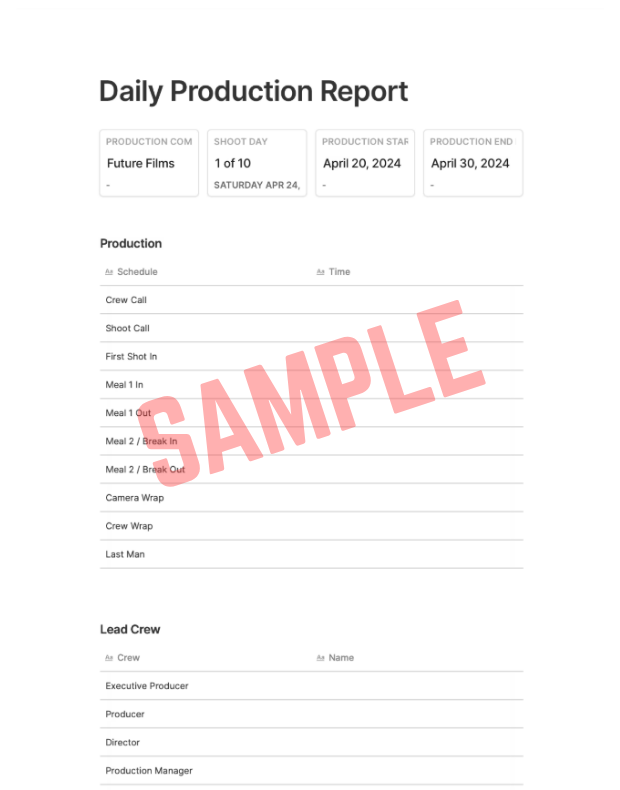
Sample Film Daily Production Report Template
A well-designed film daily production report template ensures consistency and makes data easily digestible for everyone involved in the production. Here’s an example of how a comprehensive template might be structured, highlighting key sections and the information they capture. Remember, this template can be adapted to fit the specific needs and scale of your production.
DAILY PRODUCTION REPORT
Project Title: The Midnight Garden Mystery
Production Company: Silver Screen Studios
Date: October 26, 2024
Day of Shoot: 15 of 28
Report Prepared By: Alex Turner (1st AD)
PRODUCTION SCHEDULE & LOGISTICS
- Company Move: No
- Shooting Location: Old Town Library – Main Reading Room (Ext. & Int.)
- Weather: Cloudy, 55°F (Rain in late afternoon)
- Crew Call Time: 07:00 AM
- First Shot: 08:15 AM
- Lunch Break: 13:00 PM – 14:00 PM
- Last Shot: 17:30 PM
- Wrap Time: 18:00 PM
SCENES SHOT & PROGRESS
- Scenes Completed:
- Scene 23: Library Confrontation (Pages: 2.5)
- Scene 24: Clue Discovery (Pages: 1.5)
- Scene 25: Research Montage (Pages: 1.0)
- Total Pages Shot Today: 5.0
- Total Pages to Date: 68.5 / 110
- Number of Setups: 18
- Notes on Dailies: Excellent performances, some exterior shots affected by light rain towards end of day but usable.
CREW & CAST ATTENDANCE
Crew Present:
- Alex Turner (1st AD) – 07:00-18:00
- Sarah Lee (DP) – 07:00-18:00
- Mike Johnson (Gaffer) – 06:30-18:30 (Overtime: 0.5 hr)
- And all other department heads and crew.
Cast Present:
- Eleanor Vance (Detective Miller) – Call: 07:30, Wrap: 17:45
- Thomas Gray (Librarian Smith) – Call: 09:00, Wrap: 16:00
EQUIPMENT LOG & ISSUES
- Camera: Arri Alexa Mini (no issues)
- Lenses: Cooke S4i Primes (no issues)
- Sound: Sound Devices 888 Mixer, Sennheiser MKH 416 (minor crackle on wireless lav for 30 mins, resolved by battery change)
- Lighting: Aputure 600d, various smaller LEDs (all functional)
- Vehicles: Production Van (20 miles), Talent Van (10 miles)
PROBLEMS, DELAYS & INCIDENTS
- Delay: 45 minutes due to unexpected rain for exterior shots (16:00-16:45). Shifted to interior work.
- Problem: Wireless lav microphone malfunction (resolved).
- Incident: None reported.
FINANCIAL & NEXT DAY PLAN
- Overtime Hours: Gaffer (0.5 hr), Best Boy Electric (0.5 hr)
- Petty Cash Usage: $35.00 for last-minute prop (antique book)
- Special Expenses: $50.00 for emergency hot drinks/snacks due to cold weather.
Next Day’s Schedule:
- Next Day Call Time: 07:30 AM
- Next Day Location: Grand Park (Exterior – Park Bench & Fountain)
- Scenes to Shoot: Scene 26 (Park Interrogation), Scene 27 (Flashback Sequence)
- Special Notes for Tomorrow: Check weather forecast for potential rain. Requires police permit confirmation for fountain area by 06:00 AM.
The integration of a daily production report template into your filmmaking workflow is more than just good practice; it’s a strategic move towards a more organized, efficient, and ultimately successful production. These reports serve as the bedrock of transparent communication and detailed record-keeping, benefiting every department from pre-production through post-production. By diligently tracking progress, managing resources, and documenting potential issues, you empower your team to react swiftly and keep the creative vision on track.
Investing time in creating and consistently utilizing a comprehensive film daily production report template will pay dividends in clarity, accountability, and peace of mind. Adopt this essential tool to bring a new level of professionalism and control to your next cinematic endeavor, ensuring that every day on set contributes effectively to the final masterpiece.