In today’s digital landscape, cyber incidents are an unfortunate reality for businesses and individuals alike. When a security breach or digital crime occurs, understanding what happened is paramount. A meticulously documented investigation is not just good practice; it’s often a legal necessity.
This is where a robust digital forensics investigation report template becomes an invaluable asset. It ensures that every critical detail of a cyber incident, from the initial discovery to the final recommendations, is captured comprehensively and presented clearly. Without a standardized approach, vital information can be overlooked, jeopardizing the integrity of the investigation and potential legal proceedings.
This article will explore the critical components of such a template, discuss best practices for its use, and provide a detailed sample structure. By the end, you will understand how to craft or utilize an effective digital forensics report that stands up to scrutiny and aids in swift, informed decision-making.
The Indispensable Role of a Structured Digital Forensics Report
A well-organized forensic report is more than just a summary of findings; it’s a foundational document that supports legal actions, informs management decisions, and improves future security posture. It transforms raw technical data into understandable narratives for various stakeholders. The importance of having a clear framework for reporting cannot be overstated.
Ensuring Clarity and Cohesion in Findings
Digital forensic investigations often uncover complex technical details. Presenting these findings in a clear, coherent manner is crucial for all audiences, including non-technical executives, legal counsel, and law enforcement officials. A structured report template guides the investigator in articulating the facts without excessive jargon.
It ensures that the narrative flows logically, connecting observed artifacts to their implications. This clarity helps stakeholders quickly grasp the incident’s scope, impact, and the underlying causes. Ultimately, it fosters informed decisions regarding remediation and response strategies.
Maintaining the Chain of Custody and Legal Admissibility
The legal standing of digital evidence hinges significantly on how it was collected, preserved, and documented. A professional digital forensics investigation report template includes sections dedicated to detailing the chain of custody. This meticulous record proves that evidence has not been tampered with or altered.
Proper documentation is vital for ensuring that findings are admissible in court. Investigators must detail every step taken, from imaging hard drives to analyzing log files, making the process transparent and defensible. This rigor protects the integrity of the evidence and the credibility of the investigation.
Facilitating Efficient Incident Response and Remediation
Beyond legal and executive communication, a comprehensive forensic report serves as a critical tool for internal security teams. It provides a detailed blueprint of the attack vector, compromised systems, and malicious activities observed. This knowledge is essential for effective incident response.
The report’s findings and recommendations guide remediation efforts, helping to patch vulnerabilities and strengthen defenses against similar future attacks. By learning from past incidents, organizations can continuously improve their cybersecurity resilience. A well-documented incident allows for a systematic review and implementation of protective measures.
Essential Elements for a Comprehensive Forensic Investigation Report Template
Creating an effective report requires more than just listing data; it demands a structured approach that covers all angles of an investigation. Each section of the report plays a vital role in painting a complete picture of the incident. From initial details to actionable recommendations, every piece contributes to its overall value.
Foundational Details and Executive Summary
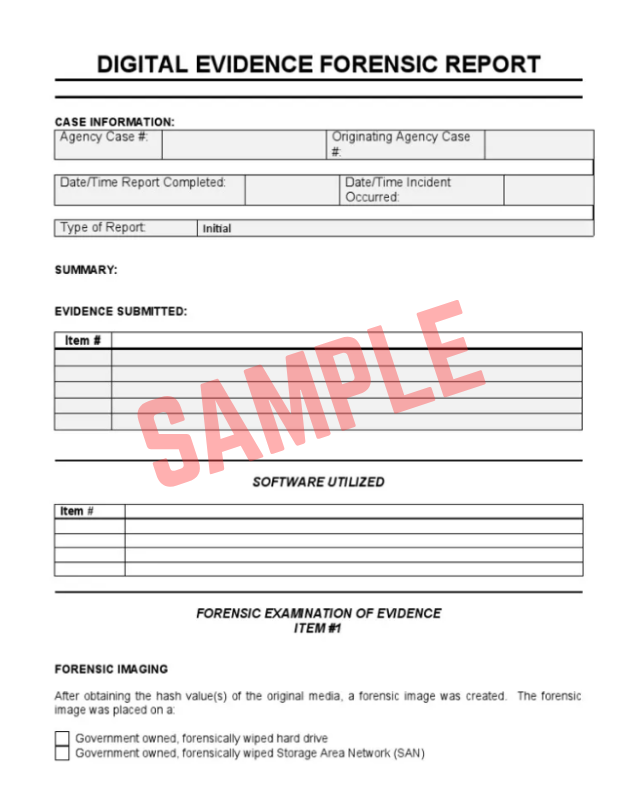
Every digital forensics investigation report template should begin with essential identifying information. This includes details like the case number, report date, and the names of the investigators involved. Such foundational information ensures proper tracking and referencing.
Following these details, an executive summary is indispensable. This high-level overview distills the entire investigation into a concise narrative, highlighting the incident’s nature, key findings, and ultimate conclusions. It allows busy stakeholders to grasp the core of the report quickly before delving into technical specifics.
Key elements often included are:
- Case ID and Title
- Date of Incident Discovery
- Date of Report
- Investigating Organization and Personnel
- Affected Systems/Individuals
- Summary of Incident
- Key Findings
- Overall Conclusions
Detailed Methodology and Evidence Analysis
This section forms the technical core of the digital forensics report. It outlines the precise steps taken during the investigation, including the tools and techniques employed. Transparency in methodology is critical for validating the investigation’s thoroughness and reproducibility.
Investigators should detail every piece of evidence collected, how it was acquired, and its relevance to the case. This includes digital artifacts such as disk images, network logs, memory dumps, and other relevant data sources. A clear explanation of the analysis performed on each artifact strengthens the report’s credibility.
Examples of details to include:
- Description of the Scope of Work
- Tools and Software Used (e.g., FTK Imager, Wireshark, Volatility)
- Evidence Acquisition Process (e.g., disk imaging, live acquisition)
- Analysis Techniques Applied (e.g., timeline analysis, malware analysis)
- Detailed Findings for Each Piece of Evidence
- Relevant Timestamps and Event Sequences
Conclusions, Recommendations, and Appendices
The conclusion section synthesizes all the technical findings into definitive statements about the incident. It answers the fundamental questions posed at the outset of the investigation, such as who, what, when, where, why, and how. This section should be unambiguous and directly supported by the evidence presented earlier.
Following the conclusions, actionable recommendations are crucial. These advise on steps to prevent similar incidents, mitigate current risks, and improve overall security posture. Appendices then provide supplementary material, such as raw log files, forensic images hashes, or copies of relevant policies.
Typical elements here are:
- Overall Conclusions based on Evidence
- Impact Assessment of the Incident
- Strategic Recommendations for Remediation
- Tactical Recommendations for Security Enhancements
- List of Exhibits and Attachments
- References to any external documentation
Sample Digital Forensics Investigation Report Template Structure
A practical digital forensics investigation report template helps ensure consistency and thoroughness in documentation. While specifics may vary based on the nature of the incident and organizational policies, the following structure provides a comprehensive framework for detailing forensic findings. This sample aims to give a clear understanding of the expected content and flow within each section.
I. Executive Summary
This brief section provides a high-level overview of the incident, the investigation’s scope, and the primary findings and conclusions. It is designed for non-technical audiences to quickly grasp the essence of the report. State the incident type, its primary impact, and the key answers uncovered.
II. Case Information
- Case ID: [Unique alphanumeric identifier]
- Incident Type: [e.g., Malware Infection, Data Breach, Unauthorized Access, Insider Threat]
- Date of Incident Discovery: [YYYY-MM-DD]
- Date of Investigation Commencement: [YYYY-MM-DD]
- Date of Report: [YYYY-MM-DD]
- Investigating Agency/Team: [Name of organization/team]
- Investigators: [List of names and roles]
- Affected Parties: [e.g., Department, User, System Name, IP Address]
III. Scope of Investigation
Clearly define the boundaries of the investigation. Detail what systems, networks, and data were examined, and any limitations encountered. This ensures that the reader understands the extent of the analysis performed.
IV. Methodology
Describe the investigative process, tools, and techniques used. This section is vital for transparency and reproducibility. Explain how evidence was identified, collected, preserved, and analyzed.
- Evidence Acquisition: Describe how digital evidence was identified and collected (e.g., disk imaging, network packet capture, cloud data download).
- Chain of Custody: Document the handling of all evidence from collection to analysis. Include details of hashes, storage, and access controls.
- Tools Utilized: List all hardware and software tools used for forensic analysis (e.g., EnCase, Autopsy, Volatility, X-Ways Forensics).
- Analysis Techniques: Explain the methods employed (e.g., timeline analysis, keyword searching, registry analysis, malware analysis, network traffic analysis).
V. Findings and Evidence Analysis
This is the core technical section. Present the detailed results of the forensic analysis, correlating evidence to support specific observations. Organize findings logically, perhaps by affected system or timeline of events.
- Initial Point of Compromise: Describe how the incident originated.
- Lateral Movement: Detail any spread of malicious activity within the network.
- Actions on Objectives: Explain what actions the attacker performed (e.g., data exfiltration, data destruction, system modification).
- Affected Data/Systems: Specify what data was accessed, modified, or exfiltrated, and which systems were impacted.
- Timeline of Events: Provide a chronological sequence of critical events discovered during the investigation.
- Key Artifacts: List and describe significant digital artifacts (e.g., malicious files, log entries, registry keys, process memory snapshots).
VI. Conclusions
Summarize the ultimate findings of the investigation in a clear, concise manner. Answer the “who, what, when, where, why, and how” questions based on the evidence presented. Avoid introducing new information here.
VII. Recommendations
Provide actionable steps to mitigate current risks, prevent future incidents, and improve overall security posture. Recommendations should be practical and prioritize based on impact and urgency.
- Short-Term Remediation: Immediate steps to contain and eradicate the threat.
- Long-Term Preventative Measures: Strategic changes to enhance security controls and policies.
- Policy and Procedure Updates: Suggestions for improving incident response plans or security policies.
VIII. Appendices
Include any supporting documentation that further details the findings. This might consist of raw log files, forensic image hashes, screenshots, or code samples. Reference these appendices within the main body of the report where appropriate.
- Exhibit A: Chain of Custody Forms
- Exhibit B: Relevant Log Files
- Exhibit C: Hash Values of Forensic Images
- Exhibit D: Screenshots of Critical Findings
Implementing a structured template like this enhances the credibility and utility of any digital forensics investigation report. It standardizes the reporting process, ensuring all necessary information is consistently captured and presented. This systematic approach contributes significantly to a more effective incident response and strengthens an organization’s overall cybersecurity resilience.
A well-crafted digital forensics investigation report template is an indispensable tool in the arsenal of any cybersecurity professional or organization. It ensures that complex technical findings are translated into clear, actionable intelligence, serving as a cornerstone for informed decision-making and legal recourse. Adopting a standardized template not only streamlines the reporting process but also significantly enhances the defensibility and impact of your investigative efforts.
By meticulously documenting every step and finding, you establish a solid foundation for future security improvements and demonstrate due diligence in the face of cyber threats. We encourage you to review your current reporting processes and consider how a structured template can elevate the quality and effectiveness of your digital forensics documentation. Investing in a robust template is an investment in your organization’s security posture and legal preparedness.